sharing a poetic LIFELINE with the world

Archive for the ‘Poetry’ Category

What we write about

A recent discussion among us Muselings had us musing on subjects to write about. Sice I am reading Natalie Goldberg‘s Writing Down the Bones , in which she suggests generating just such a list, I volunteered to post mine — mine and Natalie’s.  Here it is:

What to write about, the list so far

Write about a favorite poem. Wrie about a poem you learned in school. Write about a poem you hate. Write about memorizing poetry. Did you feel differently about the poem after you memorized it?

Write about flat feet. Write about aching feet. Write about orthotics. Write about shoes. Write about high heels. Write about fashion in shoes.

Write about art in your childhood home. Write about art in your present home. Write about art museums.

Write about school. Write about a particular year in schol. Write about a favorite teacher. Write about your least favorite teacher. Write about your favorite subject in school. Write about your least favorite subject in school.

Write about writing. Write about the physical act of writing. Do your fingers cramp? Do you like to write by hand?

Write about pens. Do you have a favorite? Do you like pencils? Do you do crossword puzzles, and if so do you do them in ink or pencil, and why?

Write about laundry. Write about laundromats. Write about laundry detergent. Write about bleach. Write about fabric softener.

Write about a favorite author. Here a few of mne:

Robert A. Heinlein. One of my favorite authors

Lewis Carroll. I am a big Lewis Carroll fan as well, both of the Alice books and of his poetry. I love the whimsey.

Write about a favorite book: Here are a couple of mine

Alice in Wonderland. I reread this every exam-time at College.Peter Pan by James M. Barrie. One of my favorite books as a kid. I also saw the play with Mary Martin as Peter. Pure magic.


Bookshelves, and what’s on them.

Food poisoning. Have you had any notable encounters with bad food?

Toothpaste. Rolling up the tube. Squeezing out the paste.

TV Advertisements. Do you watch them? Do you watch TV?

The ASPCA. ASPCA ads. Dogs. Cats.  Birds.

I remember…  Pick a memory and write about it.

Choose a color and write about it. Choose a color word and write about the word.

Write about light. Write about darkness. Write about shadows.

People you have loved.

People who have influenced you.

City streets. Country Roads. Getting lost.

Grandparents.

Pick subject  you hate and write about it as though you love it, even if you don’t. How does this make you feel? Do the opposit: pick a subject you love and write about it as though you hate it. Do you feel the need for a disclaimer at the top of the article: This does not typify my personal opinion.?

Write about today. Write about yesterday. What was notable? What was different?

Write about ‘leaving’. This can mean anything you like.

Write about your first memory. How old are you? How detailed is the memory?

Open a poetry book, pick a line, and take it from there. See where you go.

What kind of animal are you? Are you an animal at all? Can you do this, or do you draw a blank?

Write about sex. Write about how you learned about sex. Write about your first sexual experience.

Write about the closest you’ve ever felt to God or nature.

Write about God, about your belief, or lack thereof.

Write about the stars. Write about the planetarium. Write about the Museum of Natural History.

Write about the movies. Write about your favorite movie. What movies have you watched more than once? Why?

The most frightened you’ve ever been.

Write about swimming. Write about learning to swim. Write about beaches. Write about sea shells.


~~~

Courtship Moon

On this day of romance, we celebrate loved ones, both current and potential. My novel, Fey Moon, has a holiday similar to Valentine’s Day.

The fourth moon (month) in the realm of Dashevona is Courtship Moon. It is the first moon of summer and the traditional month for courting. Those single and at least fifteen years in age are given more leeway this month, with less responsibility. The first night of Courtship is the ritual dancing and exchange of gifts. Though some cities, such as the capital Valadilene, celebrate on multiple nights.

The Human belief is that the Earth created everyone Herself. Her courtship with the moon causes magic in the world. When their dance is strongest (full moon), magic is strongest.

moon-dance

Excerpt: The song was a variation of the usual Courtship song, a familiar tale of boy meets girl. She had intended to watch and learn from the dancers, but she couldn’t take her eyes off of Cail. He did have a gift. The rise and fall of his voice put her in a trance. He didn’t stop the song after the third verse, but began singing a fourth one that was new to her.

Courtship Song

A tale I sing of girl meets boy
He labored in her pa’s employ
With wooden flute he played a tune
They danced beneath the Courtship Moon

They walked and talked, their love grew swift
One day he shared a precious gift
A golden pendant, meant to swoon
They danced beneath the Courtship Moon

A picnic meal down by the lake
Where he proposed her hand to take
With hearts that yearned to marry soon
They danced beneath the Courtship Moon

From out of darkness came a birth
And Moon looked down on Mother Earth
His heart engaged, he took a chance
As Earth and Moon resume their dance

With one full turn, from left to right
He courted her most every night
Then with a nod, they each advance
As Earth and Moon resume their dance

From birth, to marriage, then to death
Their love makes magic with each breath
An endless cycle of romance
As Earth and Moon resume their dance

Enhanced by Zemanta

A Few Poems for the Holidays

Saint Nick’s Christmas Excess

snow One Christmas night, fat old Saint Nick
ate so much roast goose he got sick,
thus was forced to belay
that night’s ride in his sleigh,
rushed the gifts all to FedEx. How slick.

Next Christmas, when faced with a chimney,
he muttered, “I will not be able to shimmy
down that narrow slot,
with a fire so hot.
I’ll go in the front door, by Jiminey.”

What Happens Christmas Night

Do you wonder how, in just one night,
Saint Nick can make such a long flight?
He sends some gifts by mail,
some others by rail,
which makes his sleigh load quite light.
I’ve noticed that Saint Nick’s a bit
big around for him to fit
inside ur chimney, Christmas night
struggle must be quite a sight.

Perhaps he oils his nice red suit
all over so that he can shoot
right down the chimney. Then you’ll see
he’ll cut his hand and sprain his knee.

I guess that all those aches and pains
will hurt so much that he’ll complain
that getting down was such a chore
he’s going to leave us by the door!

White Christmas

Winter wonderland of woe
all we have is snow and snow.
Piles and piles of slushy glop,
mushy, wet and nasty slop

Wets my socks and wets my shoes
numbs my toes and shorts my fuse
Watch it snow and wish for Spring,
no more snow and shoveling.


Chiaroscuro


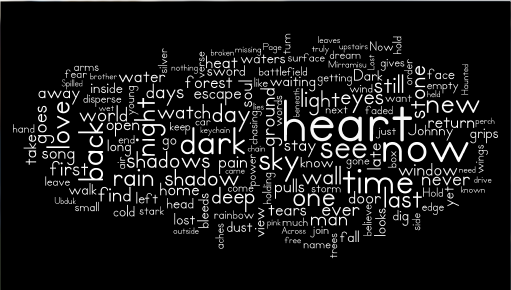
chiaroscuro-wordle

Chiaroscuro: The contrast and balance between light and dark.

Within us resides a tapestry of darkness and light. It is woven into our hopes, fears, dreams, and secrets. To understand the tapestry leads to knowing ourselves. Follow these threads of dark and light. You may be surprised at what is hidden, lost, or wandering.

This is the introduction to my poetry book, Chiaroscuro. I’m working on finding it a publishing home. The image above is a Wordle based off the contents of the book.

The neat thing about Wordle is that the visual is a representation of the content. It’s compiled of the most frequent words used, and the size of the word is proportional to how many times it appears. I was pleasantly surprised to see that heart is bigger than dark. Really, that’s the message of the collection. Heart and light survive, no matter the depth of the darkness.

Here’s a poem that just missed making the collection:

Am I Truly Living ?

I wonder, am I truly living?
I have this awful misgiving
that I’m just a blunder.
Am I truly living? I wonder.

All around me others endeavor
to take charge of their dreams, however
I get worn out just to see
others endeavor all around me.

My thoughts wander like unfocused streams
when I should be chasing my dreams.
All the time I squander,
like unfocused streams; my thoughts wander.

To exist, I need to take control
of my actions, my role
in the world; my doubts dismissed,
I need to take control to exist.

mary-sig2 (1)


Enhanced by Zemanta

Bernadette Meyer’s Writing Experiments

newmts2

Bernadette Meyer is an avant-guard poet associated with the New York school of poets.

http://www.poetryfoundation.org/bio/bernadette-mayer

http://www.nytimes.com/books/00/06/04/specials/koch-ny.html

I recently discovered her list of journal and writing experiment ideas:


PEPC LIBRARY

Bernadette Mayer's List of Journal Ideas:

Journals of:
* dreams
* food
* finances
* writing ideas
* love
* ideas for architects
* city design ideas
* beautiful and/or ugly sights
* a history of one's own writing life, written daily
* reading/music/art, etc. encountered each day
* rooms
* elaborations on weather
* people one sees-description
* subway, bus, car or other trips (e.g., the same bus trip written about
every day)
* pleasures and/or pain
* life's everyday machinery: phones, stoves, computers, etc.
* answering machine messages
* round or rectangular things, other shapes
* color
* light
* daily changes, e.g., a journal of one's desk, table, etc.
* the body and its parts
* clocks/time-keeping
* tenant-landlord situations
* telephone calls (taped?)
* skies
* dangers
* mail
* sounds
* coincidences & connections
* times of solitude

Other journal ideas:
* Write once a day in minute detail about one thing
* Write every day at the same time, e.g. lunch poems, waking ideas, etc.
* Write minimally: one line or sentence per day
* Create a collaborative journal: musical notation and poetry; two writers
alternating days; two writing about the same subject each day, etc.
* Instead of using a book, write on paper and put it up on the wall (public
journal).
* and so on ...

Bernadette Mayer's Writing Experiments
* Pick a word or phrase at random, let mind play freely around it until a
few ideas have come up, then seize on one and begin to write. Try this with
a non- connotative word, like "so" etc.
* Systematically eliminate the use of certain kinds of words or phrases from
a piece of writing: eliminate all adjectives from a poem of your own, or
take out all words beginning with 's' in Shakespeare's sonnets.
* Rewrite someone else's writing. Experiment with theft and plagiarism.
* Systematically derange the language: write a work consisting only of
prepositional phrases, or, add a gerund to every line of an already existing
work.
* Get a group of words, either randomly selected or thought up, then form
these words (only) into a piece of writing-whatever the words allow. Let
them demand their own form, or, use some words in a predetermined way.
Design words.
* Eliminate material systematically from a piece of your own writing until
it is "ultimately" reduced, or, read or write it backwards, line by line or
word by word. Read a novel backwards.
* Using phrases relating to one subject or idea, write about another,
pushing metaphor and simile as far as you can. For example, use science
terms to write about childhood or philosophic language to describe a shirt.
* Take an idea, anything that interests you, or an object, then spend a few
days looking and noticing, perhaps making notes on what comes up about that
idea, or, try to create a situation or surrounding where everything that
happens is in relation.
* Construct a poem as if the words were three-dimensional objects to be
handled in space. Print them on large cards or bricks if necessary.
* Write as you think, as close as you can come to this, that is, put pen to
paper and don't stop. Experiment writing fast and writing slow.
* Attempt tape recorder work, that is, recording without a text, perhaps at
specific times.
* Make notes on what happens or occurs to you for a limited amount of time,
then make something of it in writing.
* Get someone to write for you, pretending they are you.
* Write in a strict form, or, transform prose into a poetic form.
* Write a poem that reflects another poem, as in a mirror.
* Read or write a story or myth, then put it aside and, trying to remember
it, write it five or ten times at intervals from memory. Or, make a work out
of continuously saying, in a column or list, one sentence or line, over and
over in different ways, until you get it "right."
* Make a pattern of repetitions.
* Take an already written work of your own and insert, at random or by
choice, a paragraph or section from, for example, a psychology book or a
seed catalogue. Then study the possibilities of rearranging this work or
rewriting the "source."
* Experiment with writing in every person and tense every day.
* Explore the possibilities of lists, puzzles, riddles, dictionaries,
almanacs, etc. Consult the thesaurus where categories for the word "word"
include: word as news, word as message, word as information, word as story,
word as order or command, word as vocable, word as instruction, promise,
vow, contract.
* Write what cannot be written; for example, compose an index.
* The possibilities of synesthesia in relation to language and words: the
word and the letter as sensations, colors evoked by letters, sensations
caused by the sound of a word as apart from its meaning, etc. And the effect
of this phenomenon on you; for example, write in the water, on a moving
vehicle.
* Attempt writing in a state of mind that seems least congenial.
* Consider word and letter as forms-the concretistic distortion of a text, a
mutiplicity of o's or ea's, or a pleasing visual arrangement: "the mill pond
of chill doubt."
* Do experiments with sensory memory: record all sense images that remain
from breakfast, study which senses engage you, escape you.
* Write, taking off from visual projections, whether mental or mechanical,
without thought to the word in the ordinary sense, no craft.
* Make writing experiments over a long period of time. For example, plan how
much you will write for a particular work each day, perhaps one word or one
page.
* Write on a piece of paper where something is already printed or written.
* Attempt to eliminate all connotation from a piece of writing and vice
versa.
* Experiment with writing in a group, collaborative work: a group writing
individually off of each other's work over a long period of time in the same
room; a group contributing to the same work, sentence by sentence or line by
line; one writer being fed information and ideas while the other writes;
writing, leaving instructions for another writer to fill in what you can't
describe; compiling a book or work structured by your own language around
the writings of others; or a group working and writing off of each other's
dream writing.
* Dream work: record dreams daily, experiment with translation or
transcription of dream thought, attempt to approach the tense and
incongruity appropriate to the dream, work with the dream until a poem or
song emerges from it, use the dream as an alert form of the mind's activity
or consciousness, consider the dream a problem-solving device, change dream
characters into fictional characters, accept dream's language as a gift.
* Structure a poem or prose writing according to city streets, miles, walks,
drives. For example: Take a fourteen-block walk, writing one line per block
to create a sonnet; choose a city street familiar to you, walk it, make
notes and use them to create a work; take a long walk with a group of
writers, observe, make notes and create works, then compare them; take a
long walk or drive-write one line or sentence per mile. Variations on this.
* The uses of journals. Keep a journal that is restricted to one set of
ideas, for instance, a food or dream journal, a journal that is only written
in when it is raining, a journal of ideas about writing, a weather journal.
Remember that journals do not have to involve "good" writing-they are to be
made use of. Simple one-line entries like "No snow today" can be inspiring
later. Have 3 or 4 journals going at once, each with a different purpose.
Create a journal that is meant to be shared and commented on by another
writer--leave half of each page blank for the comments of the other.
* Type out a Shakespeare sonnet or other poem you would like to learn
about/imitate double-spaced on a page. Rewrite it in between the lines.
* Find the poems you think are the worst poems ever written, either by your
own self or other poets. Study them, then write a bad poem.
* Choose a subject you would like to write "about." Then attempt to write a
piece that absolutely avoids any relationship to that subject. Get someone
to grade you.
* Write a series of titles for as yet unwritten poems or proses.
* Work with a number of objects, moving them around on a field or
surface-describe their shifting relationships, resonances, associations. Or,
write a series of poems that have only to do with what you see in the place
where you most often write. Or, write a poem in each room of your house or
apartment. Experiment with doing this in the home you grew up in, if
possible.
* Write a bestiary (a poem about real and mythical animals).
* Write five short expressions of the most adamant anger; make a work out of
them.
* Write a work gazing into a mirror without using the pronoun I.
* A shocking experiment: Rip pages out of books at random (I guess you could
xerox them) and study them as if they were a collection of poetic/literary
material. Use this method on your old high school or college notebooks, if
possible, then create an epistemological work based on the randomly chosen
notebook pages.
* Meditate on a word, sound or list of ideas before beginning to write.
* Take a book of poetry you love and make a list, going through it poem by
poem, of the experiments, innovations, methods, intentions, etc. involved in
the creation of the works in the book.
* Write what is secret. Then write what is shared. Experiment with writing
each in two different ways: veiled language, direct language.
* Write a soothing novel in twelve short paragraphs.
* Write a work that attempts to include the names of all the physical
contents of the terrestrial world that you know.
* Take a piece of prose writing and turn it into poetic lines. Then, without
remembering that you were planning to do this, make a poem of the first and
last words of each line to see what happens. For instance, the lines (from
Einstein)
* When at the reception
* Of sense-impressions, memory pictures
* Emerge this is not yet thinking
* And when. . .
* Would become:
* When reception
* Of pictures
* Emerge thinking
* And when
* And so on. Form the original prose, poetic lines, and first-and-last word
poem into three columns on a page. Study their relationships.
* If you have an answering machine, record all messages received for one
month, then turn them into a best-selling novella.
* Write a macaronic poem (making use of as many languages as you are
conversant with).
* Attempt to speak for a day only in questions; write only in questions.
* Attempt to become in a state where the mind is flooded with ideas; attempt
to keep as many thoughts in mind simultaneously as possible. Then write
without looking at the page, typescript or computer screen (This is "called"
invisible writing).
* Choose a period of time, perhaps five or nine months. Every day, write a
letter that will never be sent to a person who does or does not exist, or to
a number of people who do or do not exist. Create a title for each letter
and don't send them. Pile them up as a book.
* Etymological work. Experiment with investigating the etymologies of all
words that interest you, including your own name(s). Approaches to
etymologies: Take a work you've already written, preferably something short,
look up the etymological meanings of every word in that work including words
like "the" and "a". Study the histories of the words used, then rewrite the
work on the basis of the etymological information found out. Another
approach: Build poems and writings form the etymological families based on
the Indo-European language constructs, for instance, the BHEL family: bulge,
bowl, belly, boulder, billow, ball, balloon; or the OINO family: one, alone,
lonely, unique, unite, unison, union; not to speak of one of the GEN
families: kin, king, kindergarten, genteel, gender, generous, genius,
genital, gingerly, pregnant, cognate, renaissance, and innate!
* Write a brief bibliography of the science and philosophy texts that
interest you. Create a file of newspaper articles that seem to relate to the
chances of writing poetry.
* Write the poem: Ways of Making Love. List them.
* Diagram a sentence in the old-fashioned way. If you don't know how, I'll
be happy to show you; if you do know how, try a really long sentence, for
instance from Melville.
* Turn a list of the objects that have something to do with a person who has
died into a poem or poem form, in homage to that person.
* Write the same poem over and over again, in different forms, until you are
weary. Another experiment: Set yourself the task of writing for four hours
at a time, perhaps once, twice or seven times a week. Don't stop until
hunger and/or fatigue take over. At the very least, always set aside a
four-hour period once a month in which to write. This is always possible and
will result in one book of poems or prose writing for each year. Then we
begin to know something.
* Attempt as a writer to win the Nobel Prize in Science by finding out how
thought becomes language, or does not.
* Take a traditional text like the pledge of allegiance to the flag. For
every noun, replace it with one that is seventh or ninth down from the
original one in the dictionary. For instance, the word "honesty" would be
replaced by "honey dew melon." Investigate what happens; different
dictionaries will produce different results.
* Attempt to write a poem or series of poems that will change the world.
Does everything written or dreamed of do this?
* Write occasional poems for weddings, for rivers, for birthdays, for other
poets' beauty, for movie stars maybe, for the anniversaries of all kinds of
loving meetings, for births, for moments of knowledge, for deaths. Writing
for the "occasion" is part of our purpose as poets in being-this is our work
in the community wherein we belong and work as speakers for others.
* Experiment with every traditional form, so as to know it.
* Write poems and proses in which you set yourself the task of using
particular words, chosen at random like the spelling exercises of children:
intelligence, amazing, weigh, weight, camel, camel's, foresight, through,
threw, never, now, snow, rein, rain. Make a story of that!
* Plan, structure, and write a long work. Consider what is the work now
needed by the culture to cure and exact even if by accident the great
exorcism of its 1998 sort-of- seeming-not-being. What do we need? What is
the poem of the future?
* What is communicable now? What more is communicable?
* Compose a list of familiar phrases, or phrases that have stayed in your
mind for a long time--from songs, from poems, from conversation:
* What's in a name? That which we call a rose
* By any other name would smell as sweet
* (Romeo and Juliet)
* A rose is a rose is a rose
* (Gertrude Stein)
* A raisin in the sun
* (Langston Hughes)
* The king was in the counting house
* Counting out his money. . .
* (Nursery rhyme)
* I sing the body electric. . .
* These United States. . .
* (Walt Whitman)
* A thing of beauty is a joy forever
* (Keats)
* (I summon up) remembrance of things past
* (WS)
* Ask not for whom the bell tolls
* It tolls for thee
* (Donne)
* Look homeward, Angel
* (Milton)
* For fools rush in where angels fear to tread
* (Pope)
* All's well that ends well
* (WS)
* I saw the best minds of my generation destroyed by madness
* (Allen Ginsberg)
* I think therefore I am
* (Descartes)
* It was the best of times, it was the worst of times,. . .
* (Dickens)
* brave new world has such people in it
* (Shakespeare, The Tempest, later Huxley)
* Odi et amo (I hate and I love)
* (Catullus)
* Water water everywhere
* Nor any drop to drink
* (Coleridge)
* Curiouser and curiouser
* (Alice in Wonderland)
* Don't worry be happy. Here's a little song I wrote. . .
* Write the longest most beautiful sentence you can imagine-make it be a
whole page.
* Set yourself the task of writing in a way you've never written before, no
matter who you are.
* What is the value of autobiography?
* Attempt to write in a way that's never been written before.
* Invent a new form.
* Write a perfect poem.
* Write a work that intersperses love with landlords.
* In a poem, list what you know.
* Address the poem to the reader.
* Write household poems-about cooking, shopping, eating and sleeping.
* Write dream collabortations in the lune form.
* Write poems that only make use of the words included in Basic English.
* Attempt to write about jobs and how they affect the writing of poetry.
* Write while being read to from science texts, or, write while being read
to by one's lover from any text.
* Trade poems with others and do not consider them your own.
* Exercises in style: Write twenty-five or more different versions of one
event.
* Review the statement: "What is happening to me, allowing for lies and
exaggerations which I try to avoid, goes into my poems."


 

I did start one, but quickly became hooked by write a rhyme:

Something Ventured, Nothing Gained?

Nothing gained through careless ventures,
spin the wheel and lose a dime
If you want a big adventure,
buddy, you can take on mine

I could do without the pounding
of my heart and sweaty hands
rather I would have abounding
quiet life that goes as planned

So as you ski down that mountain,
maybe crash into a tree,
I’ll relax beside a fountain
with a tall glass of iced tea


Mary’s Poetry Month Success

I was very pleased with my poetic productivity in April. Here’s the breakdown.

I competed in daily challenges on the Sims 3 forums. These consisted of weekly themes, and daily styles/forms. Not all poems had to be newly written for the contest.

  • Wrote 19 new poems, and entered all but one day.
  • Won twelve days (half of those were ties).
  • Earned 2600 points ($26 of Simpoints which I got in stuff for my game).
  • 1332 words of poetry written.
  • Compliments on my poems, as well as small gifts from other contestants.
  • Four new Sims friends (fellow poets).
  • Overall winner (most wins and points).
  • Eight poems packed with potential that need polishing.

I’m so glad I participated in the Sims 3 Forums rather than the Poetic Asides blog this year. It was much more intimate, and I think that helped to inspire me as the month went along.

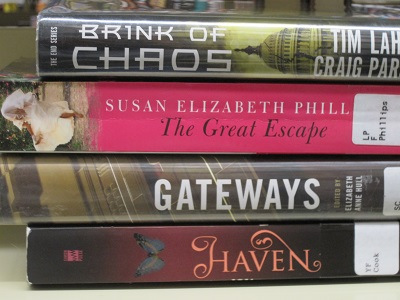
I also composed two Book Spine poems, one which I shared in my last post. The other is one I did for the library contest. Below is my poem showing what the library means to me. It was a finalist (top ten of over 100 entries).

marys-library-poem

Brink of Chaos
The Great Escape
Gateways
Haven

Doing the book spine poem at the library also had another benefit. See that bottom book? I grabbed it solely for the title. I glanced at the front cover blurb due to the butterfly. Went on instinct, and checked out the book. Read it in two days. LOVE. The book is HAVEN by Kristi Cook. It’s a YA about a girl with precognition, who transfers to a school where everyone has some sort of psychic ability. In the author’s own words: Think X-Men meets Twilight.  Loved the characters, the fresh spin on the plot. Could not put the book down. Immediately checked out book two, MIRAGE. Now eagerly waiting for book three to come out (this fall!).

To end the post, I will share with you one of the poems I wrote last month. A Villanelle.

The Author

A goddess, many worlds do I create
to fill with danger, passion, magic, flight,
with words alone manipulating fate.

A lonely princess on a grand estate,
a dragon in his lair just out of sight,
a goddess, many worlds do I create.

Each character is given a strong trait
then thrown into some unforgiving plight;
with words alone manipulating fate.

When countless suitors seek to procreate,
the dragon takes them out with just a bite.
A goddess, many worlds do I create.

A hero uses wit to then debate
and keeps the dragon occupied all night,
with words alone manipulating fate.

The dragon tricked to eat some poisoned bait,
the princess freed to her own tale rewrite.
A goddess, many worlds do I create,
with words alone manipulating fate.

mary-sig2


Enhanced by Zemanta

Poetry Month: Book Spine Poetry

If you’re not aware, April is National Poetry Month. Next week is also National Library Week. AtYourLibrary.org is celebrating both with a contest. Use the books from your library to compose a Book Spine Poem telling why the library matters to you (deadline April 20). I haven’t made it out to my library yet, but wanted to make my own book spine poem. This isn’t themed about the library, and was made using my personal library.

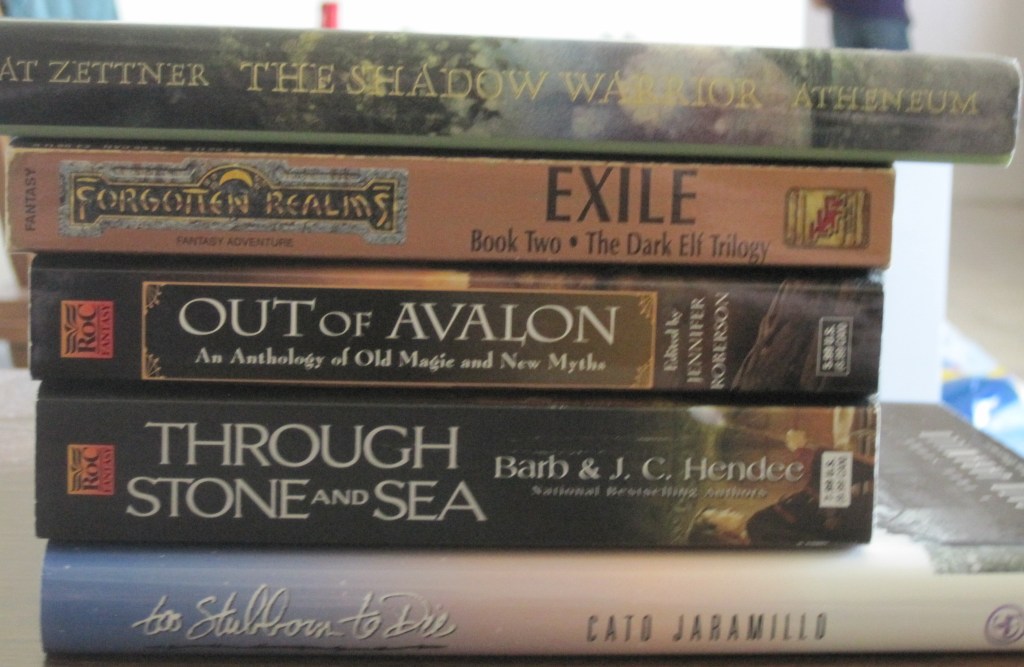
A book spine poem is made by stacking book spines so the titles make a free verse poem.

book-spine-poem-e1365800953188

Mary’s Book Spine Poem

In case that’s hard to read, or the image doesn’t load, it reads:

The Shadow Warrior
Exile

Out of Avalon
Through Stone and Sea
Too Stubborn to Die

It was a fun challenge going through all my books, pulling and mixing and shifting trying to find something I liked and that told a story. I’d lvoe to see what you come up with from your own libraries.

mary-sig2 (1)

The Mystery- Dealing with Grief

The  Mystery

By Lin Neiswender

You were the cutest thing
So happy with a simple toy like green grass
A carpet to comfort your feet
Leaves blowing down sidewalks

Yours to track  by scratchy sound
When  wind blew stone-cold
Sharing a snack with the rest of the pack

Barking fiercely while picking goodies
from kitchen trash bin with no one home
Quick to guard me like a Rottweiler

But actually just a Shetland Sheep dog
Who then dashes behind me for protection
Mysterious fur shiny white, gray, black and silver

White lion’s mane, stripes  on face, back, chest, feathers on legs
He could have been a show dog if he was a little shorter
You are a shy but beautiful boy

But I know that someday
We will meet again, all of us,
Humans and dogs and cats  and everyone

As we dance our way


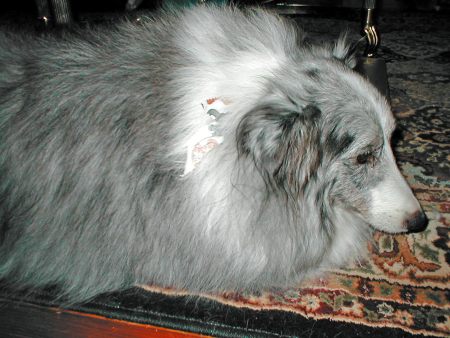
OLYMPUS DIGITAL CAMERA

I had to put my sweet Sheltie Smokey to sleep last Saturday.When I saw the suffering in his eyes and it seemed to say Mom, please do something for me. So I did the right thing and had him put to sleep. Cancer has taken another of my sweet dogs. I’m across the Rainbow Bridge still expecting to see him when I first come in. When thoughts come like that, I know I can find comfort about my decision. He is out of pain. What a good dog he was. So now life goes on with me and the cat.


Enhanced by Zemanta

How to Generate Rhymes

I love to write rhymed poetry, and as I have started on another collection of science fiction poetry set in the Aleyne universe, I’m planning to write a fair number of story-poems, a format which lends itself to rhyme.

paintmt1

PSYCHEDELIC MOUNTAIN

I have my own algorithm for generating rhymes (more about that later), but I also make use of an online rhyming dictionary and an online thesaurus.

There are as many ways to write rhymed poetry as there are writers, but one of my personal favorites is a rhyme scheme which rhymes only two lines of a four line stanza, either the first and third or the second and fourth. It’s both less overwhelmingly sing-songy and easier to write.

Here’s my algorithm for generating rhymes

As a crossword puzzle fan, I realized early on that, aside from single letters, only certain sound combinations could start words:

consonant plus “R” sound:  br, cr, dr, etc.

consonate plus “L” sound: bl, cl, etc

and a few others: ch, sh, ch,  s + almost all the other two-letter combos, s+l,

and a couple of consonants plus “w” sound: kw (quick),  etc

The key,  of course, is to concentrate on how the word sounds and now how it’s spelled:
Thus, to find all words of one syllable rhyming with “ack”:

b + ack : back
bl + ack:  black
br + ack:  brack (not a word)
bw + ack bwack (not a word)

etc.

Here’s one of my favorite poems. In the seven-line stanzas below, the third and seventh lines rhyme.


 The True Nature of Housework

The clack and the clatter
of pots and pans
rattle and ruin the peace.
Sit under the window,
it sounds like a band
that’s quite out of tune.
Will noise never cease?

The gurgle of water
that drips down the drain
says the faucet continues to leak.
The doors on the cupboards
are coming unhinged.
I can clearly hear
the kitchen door squeak.

The plates he just washed
he’ll plunk down with a plop,
creating a crack or a chip.
The dishwasher door
is still open, I know
and I’ll bet there’s a plate
that sits poised on the lip.

The silver’s all tarnished
and needs to be wiped
with pink polish and a clean rag
It’s been just like that
for the last month at least.
It looks like it came from
a rag picker‘s bag.

I sit staring out at the
peaceful blue lake
and try not to think of the mess.
If I sit here and listen
I’ll just grind my teeth.
I’m going inside;
then I won’t have to guess.

Saleema and Persona poems

On February 5, I introduced Saleema, one of our workshop winners. I noted that Saleema was a winner in our Persona category. Today I’d like to share that winning poem with you, as well as a follow up poem she has since shared with us. In a Persona, the poet writes in the voice of another person or thing. As you’ll see below, Saleema really immersed herself in this challenge.

I choose Jalāl ad-Dīn Rumi, a 13th century Sufi poet, as the voice for the assignment.

Following is a short clip about Rumi and his teacher Shams Tabrizi:

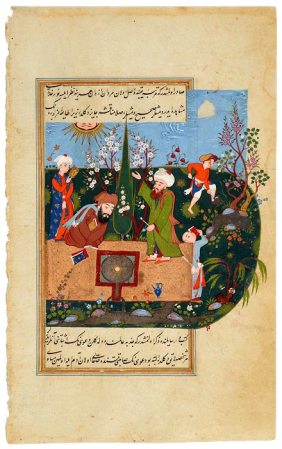
persian-miniature
“Shams-i-Tabrīzī… is credited as the spiritual instructor of Mewlānā Jalāl ad-Dīn Muhammad Balkhi, also known as Rumi. Shams is referenced with great reverence in Rumi’s poetic collection, Diwan-i Shams-i Tabrīzī (The Works of Shams of Tabriz).

According to contemporary Sufi tradition, Shams Tabrizi mysteriously disappeared. Some say he was killed by close disciples of Mewlānā Jalāl ad-Dīn Rumi, who were jealous of the close relationship between Rumi and Shams. It is also said that Shams Tabrizi left Konya and died in Khoy, where he was buried. Sultan Walad, Rumi’s son, in his Walad-Nama mathnawi, just mentions that Shams mysteriously disappeared from Konya with no more specific details.

As the years passed, Rumi attributed more and more of his own poetry to Shams as a sign of love for his departed friend and master. In Rumi’s poetry Shams becomes a symbol of God’s love for mankind; Shams was a sun (“Shams” means “Sun” in Persian) shining the Light of God on Rumi.”

[Above Information is from Wikipedia]

Note: I used the speakers name (Jalāl ad-Dīn) at the end of the poem, because Sufi poets often mention their own names in their poetry.

My Sun

The night we met the full moon winked
You etched your heart onto my soul
We whirled like the planets in the sky
Your wine washed my stumbling feet
Each spin swept a part of me away

The day you left my heart’s sun set
Heaviness haunted every breath
Your prayer carpet felt forlorn
Bereft I twirled, alone, undone
Your guidance quit
without a glance, a hint, a word

Yet, while I longed for your return
Piece by piece
my heart began to burn
Whispered words thundered
through my throbbing core
Would you raise me above the sky,
then hide a Sun that lights the way?

No! Shams would not abandon
what he loves
A mother caringly shares her breast
when she hears her hungry child cry
Neglect is not my Shams’ way
So, I will surrender to your whim
Let all think Jalāl ad-Dīn’s alone again

Like a possum I’ll play dead
while your songs ring louder than before
with words so clear they’ll shutter nights
in notes that tell of all you taught
The Divan-i Shams-i Tabrizi
Takes me to untraveled heights
Where in the One, all reunite

Shams’ earthen form
Our Beloved’s ruse
Led Jalāl ad-Dīn Rumi to Eternal Truth

By Saleema E. Giltinan 10-12-2012

The following poem was written as Sham’s answer to the poem written in Rumi’s voice (about Shams’ leaving).

NOTE: The dervish Shams-e Tabrizi had traveled throughout the Middle East searching and praying for someone who could “endure my company”.shams-tabrizi

A voice said to him, “What will you give in return?”
Shams replied, “My head!” The voice then said,
“The one you seek is Jalal ud-Din Rumi, of Konya.”

(Wikipedia/Mawlana and Shams by Sefik Can)

Al Noor: One of the 99 Name of Allah meaning Light, Enlightment
Al Mumeet: One of the 99 Names of Allah meaning “the bringer of death”.
The esoteric meaning of this Name is: The bringer of the first death,
the death to the world of illusion,
the death of the idea of separation and duality. Also known as “die before you die”.
Al Haqq: One of the 99 Names of Allah meaning “Truth, Reality”.

The Leaving  (In Sham’s Voice)
by Saleema E. Giltinan  (Copyright @ 12-12-2012)

Our yearning drew me back again
Al Noor revealed
Clandestine sight
We twirled, then rested
in Its sparks

Only you endured
my company
Reveled in my
sacred subtleties

Mumit’s roasting pot…
too bright for foes
One birth, one death,
that’s all they know

Our friendship fueled
Konya’s ire
Only holy hands
caress Love’s fire

My ways softened
as they stung
you alone coddled
my striking tongue

Affinity plants fondness
in earthy ground
I watched the leaving
lurk around

Quickening happened
You began to soar
Our destiny
at last fulfilled

Then time asked me
to pay the price
My head
a tumbled garnet gneiss

I turned to powder
in His hands
His breath sent me
where He willed

Separation plays
an ugly game
Al Haqq destroys
disquieting claims

My absence lit
your cooking pot
You died before death
tied its knot

Now whirl my son
His Light is Mine
Our steps are One
Our paths entwined

Spin until we are no more!

Thank you again, Saleema, for really embracing this form, and for allowing us to share your work here.

mary-sig2