sharing a poetic LIFELINE with the world

Posts tagged ‘Mary W. Jensen’

Mary’s Villanelle: Dark Days

I love the Villanelle. It’s very musical, with the rhyme and rhythm, and the repeating lines. When done right, it really rolls off the tongue when read aloud. My first two Villanelles are not in classic form with iambic pentameter. That added an additional challenge this time around. I also went a little darker than the previous Muselings… My mind has been on The Secret World, a modern day MMO of myths, legends, and conspiracies. So that is where I took my inspiration.

wendigo_C2

wendigo_C2 (Photo credit: doctorserone)

Dark Days 

She grips her sword, the battlefield looks stark,
almost too late to set the world aright;
Hold ground, dig deep, the days are getting dark.

A flock of ravens flies through the themepark,
abandoned structures gleaming in moonlight.
She grips her sword, the battlefield looks stark.

Filth clinging like a permanent birthmark,
wendigo crouches just within their sight–
hold ground, dig deep, the days are getting dark.

Her two companions circle like a shark–
once enemies, they now combine their might–
she grips her sword, the battlefield looks stark.

The monster takes first blood: claws tears a mark
through one man’s side, his face goes deathly white.
Hold ground, dig deep, the days are getting dark.

Wendigo falters at a shotgun’s bark
and blade moves in to finish off the fight.
She grips her sword, the battlefield looks stark;
Hold ground, dig deep, the days are getting dark.

mary-sig2 (1)

This Fantastic World: An Inspiration

“To see the world for a moment as something rich and strange is the private reward of many a discovery.”
~ Edward M. Purcell

“We live in a wonderful world that is full of beauty, charm and adventure. There is no end to the adventures that we can have if only we seek them with our eyes open.”
~Jawaharlal Nehru

“The world is full of strange phenomena that cannot be explained by the laws of logic or science.”
~Dave Barry

This world is an amazing place. There are many natural phenomena that could almost come from a fantasy novel. I’m going to describe some of these for you, focusing on the ‘wow’ factor rather than the science behind them. Links provided show pictures and more info. Most of these can also be seen on YouTube if you search. Perhaps some of these wonders can inspire you.

The Auroras (Northern and Southern Lights): This effect is probably the most well-known of those I’m going to mention. Glorious light shows in the sky, green and red curtains of light above the horizon. Known by the Cree as the Dance of the Spirits.
http://www.exploratorium.edu/learning_studio/auroras/

Aurora Borealis observed in Norway on 2006-10-28.

Aurora Borealis observed in Norway on 2006-10-28. (Photo credit: Wikipedia)

Broken spectre: A rainbow halo surrounding a shadowy figure. Also known as a Glory Ring or Brocken Bow. An effect of light and fog. It seems as if a ghost comes through a tunnel of light.
http://www.atoptics.co.uk/droplets/globrock.htm

Broken Spectre Looking Northeast from Stob Dubh

Broken Spectre Looking Northeast from Stob Dubh (Photo credit: Wikipedia)

Ball lightning: Balls of light, traveling through the sky. Wrath of a thunder god? Or chariots of fire? No short lived streak of light, but a life determined to continue.
http://www.daviddarling.info/encyclopedia/B/ball_lightning.html

Attributed to: Scott McMan

300px-Senegal_Pink_Lake

Fire rainbow: The sky on fire, wisps of cloud as flame and smoke. A wide rainbow band.
http://news.nationalgeographic.com/news/2006/06/060619-rainbow-fire.html

“Relámpago del Catatumbo” (Catatumbo lightning): ” Arcs of light in the sky, messages between the clouds, never-ending storm. This almost permanent storm has been used as light for ship navigation, giving it another name – Maracaibo Beacon. The lightning has no thunder, as if you were watching a window into another world.
http://fogonazos.blogspot.com/2007/06/catatumbo-everlasting-storm.html

The Rain of Fishes: In Honduras, the Lluvia de Peces, or Rain of Fishes, occurs a couple times each year. A huge storm blesses the people with living fish, inspiring a yearly festival to celebrate the phenomena. A modern manna from the heavens.
http://en.wikipedia.org/wiki/Lluvia_de_Peces

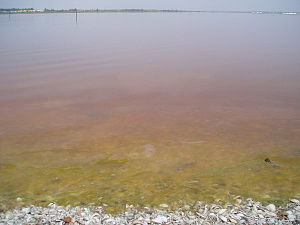
Pink lake: This is one that inspired a location in my own story, a blushing lake filled with a goddess’ tears. Shallow waters, filled with salt, shimmering shades of pink and purple.
http://www.galenfrysinger.com/senegal_pink_lake.htm

Senegal Pink Lake

Senegal Pink Lake (Photo credit: Wikipedia)

Some say that magic is merely science that has yet to be explained. But even those with solid science explanations retain their awe, their magic. Let a little of this world’s magic influence your own.

(Originally posted 05/29/08 on my personal blog, Feywriter)

Scrivener: Not Just for Novels

Many novelists have heard of Scrivener, a software for writers. Initially it was available only for Mac, but last year a version for Windows became available. While editing one of my novels lately, I became frustrated with keeping all my documents and Excel charts updated, and trying to reorder scenes or chapters for a major revamp is a big pain in Word. So I finally decided to download the 30 day free trial for Scrivener. The next day, my husband told me to go ahead and buy it, since we had both read a lot of great things about the software, and I couldn’t stop gushing about all the tools and features.

Scrivener and My Novels

I’ve imported that manuscript I’m revising, and have a newer WIP (only a few scenes written) transferred over to work on mostly from scratch. It’s a very different process for each.

One of the biggest features of Scrivener is that it you break each scene into its own document, but it can still be easily viewed in chapters, or the entire project. It’s been a LOT of work breaking my manuscript into individual scenes, and filling out the attached notecards with updated summaries, but it is SO worth it.

I can easily drag and drop a scene into a new location, I’ve used keywords which color the notecards so I can see POV at a glance, and the time I spent summarizing scenes has given me a basis for an updated outline and synopsis. I love having everything in one place. I used to have documents for characters, world building, different drafts; Excel sheets for keeping track of word count, Point of View, chapter length. Timelines and chapter outlines were a number of drafts out of date. With the ease of having all my info readily available, in one program, I can easily keep everything up to date, find what I need, and move things around.

But that’s not all! I had the brilliant idea while fiddling with my manuscript that I can use these same features for my poetry.

Scrivener and My Poetry

I can use keywords to categorize my poems, put them in collections, and easily reorder poems for compiling into a chapbook. No more copy/paste in a giant word document. If I want to work on an individual poem, I can. If I want to see how it fits into a larger body of work, I can do that too.

My old method: Over a dozen folders, sometimes with a poem in multiple locations. Separate Excel sheets for information like theme. Not only a mess, but I never seem to have everything up to date. I forget to add a poem to my themes list. I have poems in my “new poems”  folder for as far back as 2006 that I haven’t gotten around to categorizing (pure laziness, as I do have a miscellaneous folder).

Now: I write a new poem, tag it with themes, and mark it as a rough draft. I could even list in the notes, or keywords, which poems I’ve shared with whom. I never can remember which ones I’ve shared with my husband, or my critique group. I love being able to have all that information in one place. If I can’t view it at a glance, it’s only a quick click away. 

For comparison, here’s my Excel sheet I used to keep track of themes in my poetry: (click on pictures to biggify)

And here’s my collection of color poems, with their keywords (themes, in this case), in corkboard view:

In this same folder, all I have to do is click on the Scrivenings button up top (highlighted in yellow below) to see the composite of all the text. I’ve circled in red the binder on the left, where I can drag documents to rearrange them, which would update the composite text, as well as the corkboard and other views.

If you can’t tell, I LOVE Scrivener. It’s become such a useful tool, not only for my novels, but for my poetry as well. I’m super excited to put together a new chapbook now. What writing software have you tried?

Focus on Form: Aragman

Welcome to Focus on Form. For the next three weeks, each of us Muselings will be writing a poem in the same form and sharing it here on the blog. 

Aragman

Aragman (pronounced “a rag man”) is a fairly new form, created by Sal Buttaci in 2005. All poetry forms have to start somewhere! I’m not sure where I first heard about this style, but the notes for it have been sitting in my poetry folder for years now. I figured this would be an ideal time to pull it out and try something new.

Rules

The poem consists of six-line stanzas, ending with a stand alone line.

The concept centers around anagrams (“aragman” is, in fact, an anagram of “anagram”). Here are the rules, as set by Buttaci:

  1. First of all, begin with a word or two, perhaps your first name or first and last name. Settle on a word or two with not too many letters.
  2.  After you settle on a word, go to the internet site http://Wordsmith.org/anagram
  3. Type in your word and click on “Get Anagrams.” Instantly, you will be provided with all the words that use the letters of your chosen word.
  4. Copy/paste all the words that are derived from your chosen word and carry it over to your Microsoft Word screen, give the file a name, and save it.
  5. Now take a look at each of the anagrams and decide on a few for your aragman. You will need three for each six-line stanza. From the list select those anagrams that can be woven into your poem.
  6. In each stanza, odd-numbered lines 1, 3, and 5 are different anagrams from your list. If it’s possible, restrict each anagram on these lines to the same number of syllables. Make these anagram lines darker than the others. Even-numbered lines 2, 4, and 6 are completions of corresponding anagram lines 1, 3, and 5. If possible, let these completion lines also conform to the same number of syllables.
  7. The poem’s last line stands alone, after the stanzas, and it is one more anagram line.

The trick for this is finding a good phrase or word that will produce enough workable anagrams. Have fun trying different word combinations until you find something you like.

Examples

Here are a few stanzas from Buttaci’s original poem, based off his first name:

SENDING SALVATORE SOME ANAGRAMS

A slaver to
the labor of wordplay
A travel so
vicariously thrilling
A vast lore
from which to dabble

Altas over
a hefting of strong words
A rave slot
machine to pull down poems
Area volts
zapped in poetic lines

Tear salvo
from the broken-hearted
Tears oval
and wet flow down faces
Alas, voter!
it’s time to add your name to

Art as love 

© 2005 Salvatore Buttaci

And here is my own poem. For my first attempt, I decided to make a tribute to this group:

MUSELINGS

Mingles us
in lingering chats
Less in mug
as we drink, think
In sums gel
the words we play

Lines smug
from much revision
Single sum
we come together
Smile sung
our words do ring

El Musings

Your Turn

Now I open it up to you. I welcome any feedback on my poem, as long as it is constructive and not destructive. Let’s help each other improve.

I’d love to see your own attempts at the form as well. You can post them in the comments here, on future posts, or link to your poem if it’s on a separate site. I hope you have fun with the Aragman.

How 750 words Freed Me

Swirling thoughts

Swirling Thoughts Image via Wikipedia

Today I’m going to share with you my favorite tool for dealing with writers block.

You may already be familiar with Morning Pages. This started with Julia Cameron, creator of The Artist’s Way. “Morning Pages are three pages of longhand writing, strictly stream-of-consciousness.” The idea is to, first thing in the morning, get out a notebook and write three pages of whatever is in your head. No overthinking. This clears your head for the rest of the day, opening you to inspiration, happiness, opportunity.

My problems with this system? I don’t function first thing in the morning. And I’ve been burned before by someone finding and reading stream-of-consciousness pages, and I don’t have a convenient place to keep these close and yet secret.

The solution? 750words.com. This takes the same concept online. It’s easier to sit down at your computer than find a pen or pencil and write by hand. (At least for some of us.)

The site is completely private. No one will be reading your words, you can do them at any time in the day, and there are incentives! Streaks and different statistics can earn animal badges. Amazing how motivating it is to get them. There are also monthly challenges to write daily for a special badge and bragging rights. A point system keeps track of how many days you’ve started and completed your 750 words. Sometimes it’s an incentive, especially if I have a streak going that I don’t want to break. But I never get reprimanded if I go too long without visiting.

My first month was brutal. My brain wanted to edit my words, censor, plan. I had a hard time simply opening my consciousness and writing whatever. Now, even if I’ve gone a month without writing anything, it’s so easy to get back into.

Since starting on the site (just over a year now!), my thoughts are clearer, my ideas more frequent, I’m less bogged by negativity. Even my typing speed has gone up with all the speed typing to keep up with my thoughts. I spend less time worrying about issues, which frees my subconscious to other ideas. I wish I was more consistent in using the site, as I know the results are positive.

750 words is: 
My rambling,
brainstorming,
venting,
planning,
documenting,
a bit of creative writing,
pure randomness.

No worries about it being read.
Safe.
Unfiltered.

Some people use the site for their regular creative writing. Some use it as a serious journal. Others following the guidelines of Morning Pages. Whatever purpose you want. This is completely for you alone. No one else. The site is completely free, so no reason not to give it a try.

Next on Mary’s Expression (March19): a poetry prompt.

Musical Chairs: On Writing Groups

Last time on Mary’s Expression, I posted about a famous writing group, The Inklings. Since then, Anne has written about how to find your own creative tribe. Today, I’m going to share my own experiences with writing groups.

English: Playing musical chairs at the Our Com...

Image via Wikipedia

Finding a good writing group is hard. Joining a new group is like musical chairs. You’re circling, getting a feel of the music, the routine, when suddenly it stops and you have to find your bearings. If you find a space, you have a moment to see who’s around you, how you fit in with the group. But just as you get comfy, the music changes and things get shook up. And the group always seems to be shrinking. No matter how many new people come in, there’s always a good portion who just can’t find a seat, don’t quite fit in. I’ve been on both ends of this.

And what’s a good fit at one point in your life or career may not work for you later. So you have to learn not to blame yourself or the other members if a group simply isn’t working out. Sometimes it’s best just to move on. You can’t always predict who you’ll finally click with.

The first group I was really a part of was Writing.com. It’s not a true writer’s group per se, more of a community. There are plenty of other members to share your work with and get comments from. But it’s huge. The number of members is currently approaching one million. This makes it very hard to get noticed. To get the most out of it, you have to put the work in. Review other members, participate in contests and forums. There are specialized groups formed by members, some for discussion, or games, or critique. I think Writing.com’s best strength is getting feedback on shorter works, poetry or short stories. Downsides to sharing a novel on Writing.com:

  • A free membership is limited portfolio space, so it would be better to upgrade
  • Formatting isn’t as easy as copy and paste. Even the formatting codes are site-specific, not standard HTML, so it takes a lot of effort to get your chapter/book presentable
  • The first chapter trap. With such a variety of members, it’s easy to get a lot of comments on your first couple chapters. Almost impossible to get feedback past chapter three unless you find a dedicated writing buddy or group. (Really, this is a drawback of most online groups.)

I’m still a member of Writing.com, but I don’t put the time into it that I used to. As I focused more on novels, I started looking elsewhere.

I’ve tried a few other online writing groups. Dreaming In Ink is one of the better. They are very strict on getting in regular critiques. This isn’t a bad thing, and has kept the group strong, but when circumstances came that I was no longer able to keep up, I moved on. Who knows, I may go back someday. They have a great system going for them.

For poetry, I was very lucky to be in at the start of this group, The Poetic Muselings.

Last year I started my own fantasy group, Society for Arcane Gibberish Authors (SAGA). We’re still fledgling, and open to new members. So if you write fantasy, and want a more casual group, check out SAGA.

One thing I’ve learned over the years, is that an online group has different dynamics and strengths than a local group. Online groups are great for the line edits, the nitty-gritty stuff. It’s super easy to mark up text and share with someone. But in-person groups are good for those moments you simply need to talk over a plot point, or brainstorm. I definitely recommend a local group or writing buddy. Even if you don’t critique each other’s work, talking with other writers is priceless.

When it comes to local groups, I’ve had a rough road. The challenge is finding people with the same skill and dedication. With my first group, only two of us wanted to write as a career, for the others it was a hobby. Since the dedication wasn’t there, the group eventually fell apart. With my current group, we’re struggling with scheduling so more people can come, and getting more members.
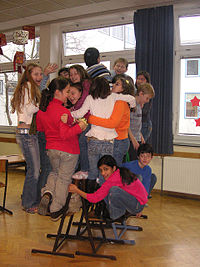
non-competitive musical chairs, Wikipedia

non-competitive musical chairs, Image via Wikipedia

So whatever route you go, online or in person, there will be challenges and downfalls. Sometimes you have to hold your spot in musical chairs, and sometimes you have to give it up. And sometimes you have to hold on to each other and do your best not to fall off.

Do you have a good writing group? How long have you been together? If not, I wish you the best in finding one! 


Next time on Mary’s Expression (March 5): Freeing creativity.


mary-sig2


Inklings and Writing Groups

English: THe Pub Eagle and Child in Oxford, wh...

Did you know that some famous fantasy writers were part of a writing group? The Inklings was a group of literary enthusiasts who encouraged writing fantasy. The four most prominent members were C.S. Lewis, J.R.R. Tolkien, Charles Williams, and Owen Barfield. Other frequent members included Tolkien’s son Christopher, C.S. Lewis’ older brother Warren, Roger Lancelyn Green, Adam Fox, Hugo Dyson, Robert Havard, J.A.W. Barnett, Lord David Cecil, and Nevill Coghill. Warren Lewis described the group as “…neither a club nor a literary society, though it partook of the nature of both. There were no rules, officers, agendas, or formal elections.”

Who are these people?

English: Round sign at the Eagle and Child Pub...

  • C.S. Lewis is most known for the Narnia Chronicles.
  • J.R.R. Tolkien  is known for the epic Lord of the Rings.
  • Charles Williams wrote a total of seven novels, including “War in Heaven” and “All Hallow’s Eve”.
  • Owen Barfield mainly wrote philosophy, on topics such as the evolution of human consciousness. He did, however, write one fairy tale: “The Silver Trumpet.”

The Inklings usually met at Lewis’ college rooms or at the Eagle and Child pub (popularly called the Bird and Baby) in Oxford England. Meetings took place on Thursday evenings. They would read and talk about each other’s works in progress, discuss fantasy and philosophy, and enjoy the company of friends. The pub meetings were more for fun; they wouldn’t read manuscripts, but sometimes read bad poetry to see how long they could last before laughing.

The group started in 1933 and met regularly for the next 15 years. Everyone benefited. Tolkien continued to work on Lord of the Rings at the encouragement of C.S. Lewis. Each writer improved their work from suggestions by other members. Their discussions led to essays, lectures, and other works in the attempt to legitimize fantasy and fairy tales as more than children’s stories, to be seen as liable literary pieces.

What does this mean for me?

Writers can find similar benefits in today’s writing groups, whether you join an existing one or create your own, online or in person. Friendships can be made when you find someone with similar interests. Sharing work will improve your writing and critiquing skills. Or perhaps you only want to discuss literature. The Inklings showed that a writers group doesn’t have to always be serious, or have any sort of leadership. All it takes is a group of people with something in common. Next time I’ll talk about my own experiences with writing groups, and how you can find your own.

A fun, related bit of trivia:

Lord of the Rings Online is an online multiplayer game based on Tolkien’s Middle Earth. While my husband and I were playing, we came across an interesting quest chain from a hobbit named Ronald Dwale. At one point you have to fetch his lost paper. The sheet of paper starts out: “In a hole there once lived a boar. No, wait, that’s not right.” The second ‘R’ in J.R.R. stands for Ronald, and his story “The Hobbit” happens to start very similarly to this paper: “In a hole in the ground there lived a hobbit.”

The final part of the quest chain is Missing the Meeting. If you own the game, I encourage you to go experience the quest yourself, but the basics is that Ronald Dwale is unable to attend the next meeting of his writing society. You have to deliver his message to The Bird and Baby Inn. “With the return of my lost paper, I really should get started on my new book, but I haven’t an inkling how I should reach my friends in time to tell them of my absence.”

When you visit the Bird and Baby Inn, you see the following “Inklings” in the back room:

Jack Lewisdon ((C.S. “Jack” Lewis))
Carlo Williams ((Charles Williams))
Owen Farfield ((Owen Barfield))

So if you ever happen upon this quest in game, enjoy the developers tribute to the Inklings.

(Originally written for a Writing.com Fantasy Newsletter)

Next time on Mary’s Expression (Feb 20): Delving deeper into writing groups.

So, You’re a Creative Genius… Now What?: A review

“I contend that if you’re not actively creating something, you’re not entirely alive.” ~Carl King

You’re inspired, you’ve released your creative genius. What do you do with it? This is where Carl King’s book, So, You’re a Creative Genius… Now What?, comes into power.

I first tuned into this book by following links about introverts, ending up on Carl King’s blog post 10 Myths About Introverts (a good read, but another topic). I liked King’s way of thinking, and saw that he had a book. The publisher, MWP, has a sample from the book on their website. I devoured all seventeen sample pages, and filled up a page in my bliss book with quotes and inspirations from that alone. I was sold, and bought the book next chance I got.

King doesn’t mince words. Every sentence, every page, has impact. You won’t find repetition or filler here. He has a quirky humor, and tells it straight.

This book covers so many topics relating to creativity. From your personal workspace (spacestation), to social interactions, the business, and daily routines. It’s a survival guide for the creative soul. About making the most of that wonderful brain you’ve got, not wasting your imagination and creativity.

As I’ve traveled the path of submitting my writing, both fiction and poetry, in the hopes for publication, I really liked how King compared us to salesman. The salesman gets fired every day. “And at the end of the day, even if you do a great job, you get fired. Because you’re paid to wake up and look for work each and every day.” Definitely something I can relate to. But then he turns it around, shows how we can learn from this state of being. “The flip side of this paradox is that a salesman is never unemployed, because he creates his own destiny.”

I recommend this book for anyone whose hobby or work is creative.

Next time on Mary’s Expression: writers groups.

Zen in the Art of Writing: A Review

“You fail only if you stop writing.” ~Ray Bradbury

The above quote has long been my mantra for writing. I keep it at the top of my daily writing document. So, as inspired as I am by this one statement of Bradbury’s, I was delighted to come across an entire book of such words. Zen in the Art of Writing is a collection of essays that Ray Bradbury has written, ranging in publication date from 1961 to 1986. The collection, published in 1990, is still relevant today. The messages just as true.

The essays are as follows:

  • The Joy of Writing
  • Run Fast, Stand Still, Or, The Thing at the Top of the Stairs, Or, New Ghosts from Old Minds
  • How to Keep and Feed a Muse
  • Drunk, and in Charge of a Bicycle
  • Investing Dimes: Fahrenheit 451
  • Just This Side of Byzantium: Dandelion Wine
  • On the Shoulders of Giants
  • The Secret Mind
  • Zen in the Art of Writing
  • … On Creativity

In these, Bradbury shares his experiences with life and writing, and shows how entwined the two are. He takes inspiration from his own life, his own passions.

When I picked up this book and started reading, it was impossible to put down. It spoke to my own passions, reignited my zest for writing. A reminder of why I do what I do. He does share advice, some how-to for writers, but what I took most was the underlying celebration of the art. The book’s subtitle is Releasing the Creative Genius Within You, and it lives up to that task.

“When honest love speaks, when true admiration begins, when excitement rises, when hate curls like smoke, you need never doubt that creativity will stay with you for a lifetime.”

~Ray Bradbury, from How to Keep and Feed a Muse

I definitely recommend this book, both for aspiring writers and those who’ve been long in the trenches. It is a joy to read, and will take you back to the roots of not just the how-to write, but the why. If you’ve lost that love, found the passion dimming, rediscover it here.

Next time on Mary’s Expression: More on the Creative Genius.

The Poetry of Pink

A Young Mary

Mary, two years old

I don’t consider myself very girly. I fancy comfort over style, don’t wear make-up, and for much of my life avoided the color pink. When I was a little girl, I LOVED the color. That soft, carnation pink reminiscent of pebbles and cherry blossoms. Last year I let both the little girl and the color back into my life.

Pink won’t make me a spoiled princess. It can be fun and flirty. It’s not about wearing the color, but embracing the essence.

I love to rock out the vocals in the Rock Band video game series, so honored that expression by naming my in-game band Pink Ink.

Pink ink is also a reference to my writing. I often type up rough drafts in pink text. On a mental level, it keeps me in a more playful, creative mood. On a physical level, it’s harder to read the text so I can focus more on new words than the quality of what’s already written.

Once I decided that being associated with pink wouldn’t label me or put me in a box, it freed me to use it as inspiration, a tool of my own expression. I have an entire page in my bliss book dedicated to pink. A reminder to own pink, what the color means to me, and some fun pink stickers like a pig and a butterfly. Here’s a poem I wrote as I delved into the heart (and letters) of pink.

palace for my soul–
where I am pampered,
feel pretty;
a safe place to play,
my power and passion
come through.

Ink flows from inspiration,
introspection brings illumination,
revealing my true identity,

leaving me nude–
a natural nymph,
wild and new
as I live in the Now.

Knowledge gained
is the key to self,
to the fragile case
protecting my keepsakes.
Unlock the door.
Kiss fate
create Karma.

Do you have a color that inspires you? Or a color that you avoid?

Don’t forget to enter our contest to win a copy of Lifelines.

Next time on Mary’s Expression: A fun exercise to create unique imagery.