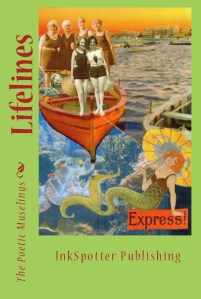
sharing a poetic LIFELINE with the world

When we decided to hold a contest about your favorite poet, poem, and the reasons you chose what you did, we knew we’d get some interesting responses. What an amazing breadth of ideas, selection of poetry, and challenge!

We found your poets, and your poems, then reviewed the comments several times. Lewis Carroll to Sylvia Plath. Ogden Nash to Czeslaw Milosz. Ted Koosier’s stark sketch to Shakespeare’s sonnets. Keats to Seamus Heaney. Don Blanding inspired one responder to write her own poem, she was so moved by his “Vagabond’s House”.* Not to mention our own favorites scattered through the stack.

After much discussion, Edward Harsen’s choice and explanation of the “pig poem” by Douglas “Woody” Woodson climbed to the top. Here’s the poem and what Edward said:

Fourteener 279
(Please help me get this pig, dear Lord, into my truck)

Please help me get this pig, dear Lord, into my truck.
Like Jesus, he senses the coming end; unlike Him,
The pig’s exhausted us both with flailing. My hands bleed
From the scrap-wood ramp and sides of the truck bed.
The rope leash burns my flesh. My plan, God, was food
For family and fold, the head and feet for the poor. But Satan,
It seems, is breathing hot stink at me. The pig braces,
Digs four hooves in, and stares. I’d gotten him half way up,
Tied him, then put my shoulder to him. He kicked my tooth
Loose, Lord. My eyes watered. Blasphemy had its way
With me. Now, covered with muck, almost broken, I pray:
Help those who suffer most first. I’ll wait, catch my breath.
Then, please forgive me, and grant one small miracle
Father: Get this pig in my truck to take to slaughter.

Douglas ‘Woody’ Woodsum

– Why?
This is such a meaningful prayer, such an aspiration. There is humor and desperation in the sense, there is a compelling voice, the necessary economy and brilliant execution. This poem clearly needs to be said, the speaker needs to be heard. Nothing is missing from the recitation, and the music is beautiful. The familiarity of the matter and the clarity of the form make this poem ring like a single bell. I would want everything I write to be this sufficient.

We asked Edward for a bit about himself, and were equally delighted with what he said and how he said it:
First, thank you, and the Muselings, for the honor of being named the winner of this contest – what a great treat to receive on my birthday!

I have been writing poetry and prose since school, and worked as associate editor for Street Press and Magazine during the late ’70s and early ’80s. I have published poems in Long Island Press, Wood Coin, Shrub Oak and Street Press, and most recently in analogpress.net.  Two chapbooks of my poems have also been published: RENT, 1977; Surf Club, 1982.  After marrying my wife Jeanine and while raising John and Sebastian, our sons, writing took a back seat to most of everything else life provided. It has been only in the last five or so years that I have been writing poetry again, sending poems to publishers, polishing a manuscript.

My wife Jeanine is a singer and songwriter, a marvelous talent and inspiration to me. Music is central to the way I hear language, and her ability to compose and arrange is both mystifying and beautiful to me.  She also writes in rhyme, which produces a lyric quality that is different to my poems.  Ours is a magical partnership.

In my professional life, I work in Facilities and Property Management.  Since 2001, I have been researching business relationship methods, supply chain management and commercial competitiveness. I have written white papers and employee training programs for the territories I manage.  I find that a well-written email can be a piece of persuasive exposition, or a format for precision delivery of technical or difficult information.  Grammar, sentence structure, timing, format, and sense of audience: the pegboard-hung tools of the creative and technical writer.  

I am pleased that the older poems are immature and playful; pleased, too, that these recent poems are more clear and easier to say.  Encouraged by Apollo’s Lyre and other magazines, I have put together a manuscript of sixty-some-odd pieces called, “Three Sisters,” and will be shopping that around this year.

Best wishes to you for the new year.

Edward Harsen

Thank you, Edward, and the rest of you hearty souls who shared your thoughts and favorites with us. We greatly appreciate your participation, and hop you found it a fun process, too.

* We loved Eileen Peterson’s poem, “Dream House,” and will share that with you in a couple of weeks, as we talk more about “inspiration” — until then, keep writing and reading, and happy new year to all.

(Updated with corrected links)

Critters / Critique.org  hosts the annual Preditors & Editors™ Readers’ Poll which honors print & electronic publications published during 2011. (Click here for the official rules.)

DEADLINE FOR VOTING IS JAN. 10, 2012.

Lifelines, our Poetic Muselings anthology, is nominated in several categories. Also, Apollo’s Lyre is nominated in three categories, including Best Poetry ezine — as editor of the poetry column, I’m especially excited. Links and details are below.

To vote in this poll, you must fill in your name and email and the scrambled letters in a “captcha” box — this way they can decide that a real person is voting. You will receive an email with a confirming link to follow, which validates your vote.

Nominees are listed alphabetically in each category, so you can find your favorites that way. We would appreciate your support and your vote for us in the following categories:

Anthology — (Lifelines)
http://critters.org/predpoll/antho.shtml

Book cover, Lifelines, Lin Neiswender
http://www.critters.org/predpoll/bookart.shtml

Poets, Poetic Muselings
http://critters.org/predpoll/poet.shtml

Poetry ezine — Apollo’s Lyre
http://critters.org/predpoll/poetryzine.shtml

There are many other categories being honored. Please check them out including:

Other Apollo’s Lyre nominations are Fiction ezine and ezine editor Jim Harrington   http://critters.org/predpoll/fictionzine.shtml,  http://critters.org/predpoll/zineeditor.shtml

ThePoetic Muselings grew out of the Muse Online Writers Conference, which is nominated under best writers workshops. Learn more about this outstanding conference by following the link with the poll:
http://critters.org/predpoll/writerws.shtml

And we have publishers to vote for, too. InkSpotter, our publisher, is on the list, as is MuseItUp, connected to the Muse Conference:
http://critters.org/predpoll/ebookpublisher.shtml

We thank you for your consideration of us on this poll, and would be happy to hear your comments.

Coming on Friday — the long-awaited results of our contest. Very difficult challenge, but we are ready to post it. Again, our deepest thanks to all of out participants.

I learned a new word  recently, courtesy of a friend and Wiki:

Ekphrasis or ecphrasis is the graphic, often dramatic, description of a visual work of art. In ancient times it referred to a description of any thing, person, or experience. The word comes from the Greek ek and phrasis, ‘out’ and ‘speak’ respectively, verb ekphrazein, to proclaim or call an inanimate object by name.

Nowadays it might be a snapshot of a scene, a work of art, or any creation that puts you in the head of the participants or an object and tell’s you what is actually happening within it.

So I thought, why not pick one of my collages as a prompt and write about it?

The one I chose is called “La Fleur” and here it is:

La Fleur

©2008 Lin Neiswender

Here is my poem about the collage:

The Photograph

Rose Pink my Papa calls me, his little blossom
I smile inside but not for the photograph
The buttons on my shoes are too tight and pinch my toes

My little dogs are lucky, they can run free with bare paws
On the fresh green grass, and rush into the house
When they are tired, heads out the window
Listening to the bird sing

But even they are dressed too fine for comfort
Tight bows of Mama’s fine silk ribbon tied
Around their necks, choking them as does
My lace collar choke me

Still a little girl’s first love
Is her Papa, and so I endure
The scratching of the lace,
The tightness of the shoes

All so Papa can take his photograph
Of his La Fleur Rose

©2012 Lin Neiswender


The end of the year is a fantastic time to evaluate one’s writing life with an eye to the future.  It’s a time to look at the big picture and see if you have met, exceeded, or fallen short of your self-created writing goals for the year.  This self-evaluation was inspired by the About.com Graduate School post, Check in With Yourself: End of Semester Self-Evaluation.  I’ve found that doing a regular self-evaluation is a great tool for reflection on my graduate school experiences.  This evaluation is not an excuse for you to beat yourself up; instead it will allow you to get a clearer picture of your writing life.

Consider your responses to these questions.  It might help to actually write them down.  🙂

Consider the last year:

  • How did my year begin?
  • What were my submission plans, writing goals, and marketing plans (if applicable)?
  • Did I allocate enough time for writing, typing and editing my work?
  • Were my expectations met?
  • What surprised me this year?
  • If I could do anything over, what would I choose?  What would I do differently?
  • What are my writing strengths and witnesses?
  • How might I address these weaknesses?
  • How can I augment these strengths?
  • What have I learned this year?  About writing?  About subjects of interest to me?  Personally?

After thoughtful consideration, what can you conclude about your year?  What will you do differently next year?

Some ideas to think about for 2012:

Set aside regular times to write.  Be flexible.  If you are a morning person write in the mornings, if not, write in the afternoons or evenings.  Consider investing in writing prompt books or get writing prompts off the internet, so you are not stuck for ideas.  Remember, writers write!

Consider collaborating on a writing project with a writing friend or online critique group.  Collaborating is a great way to support one another while holding each other accountable.

Take time at the end of 2011 or the beginning of 2012 to revisit your writing goals.  Are they too ambitious or not ambitious enough?  Can you break your goals down into smaller, more manageable steps?  If you haven’t made any writing goals, is it time to do so?  Think about sharing your writing goals with supportive family members and friends.  Do you have any deadlines looming?  Make a note of those and give yourself time to meet them.

Reflect on any Works in Progress (WIPs) you have.  Is it time to let your WIPs go or is it time to breathe new life into a WIP?

Every year is a new beginning.  A new year is a great time to establish good writing habits and to reflect on the past year.  It’s also a good time to congratulate yourself on what you accomplished in 2011 and realize what you did right. See you in 2012!

Enhanced by Zemanta

75px-Dragon_(PSF)

I love reading poetry. Not only does reading poetry expands my poetic horizons, butI constantly find inspiration in other’s work. Sometimes the subject touches a chord, sometimes I want to try out a particular poetic device, and sometimes — well — it awakens my playful side.

A couple of weeks ago, Robert Lee Brewer posted a “magic” prompt on his blog,
http://www.writersdigest.com/editor-blogs/poetic-asides
and Mark Windham wrote a rip-roaring yarn involving a dragon and a brave hero.

I read Mark’s poem. After bopping myself over the head for having overlooked such a delightful subject, I wrote a poem of my own.

Here they are: first Mark’s poem and then my own.

Mark’s Poem

 (so far untitled)

Damn, but dragon hide is sturdy stuff,
My lance broken, horse dead or run off.
My shield was busted by a swipe of tail,
Helmet went flying and left arm broken.
Our foolishly brave troop is down to me plus three.
All hiding and rethinking our chivalrous vows.
Two have died from swipes of massive claws,
Three roasted in fiery breath, one ingested I fear.
Sitting here with my back against this boulder,
Wondering how in the hell to get out of this mess,
Pledging that the monastery will be my destination;
Damsels can stay in distress, the dragon keep his gold.
What’s this? A newcomer to our futility. Oh Joy!
Much help, I am sure, this old man trudging up the hill;
Stooped against the slope, leaning mightily on his staff,
Clothed in oversized robes and wide brimmed hat.
Halfway up the hill, just below my hiding place,
He is greeted by the dragon’s challenging roar.
Stopping, as if mildly distracted by a butterfly,
He looks from under his hat and strokes his beard.
I hear the now familiar mighty beating of dragon wings,
The old man seems unperturbed, as if studying the event.
Another roar accompanies feeling the heat of belched fire;
Much like seeing the executioners axe, I cannot look away.
Suddenly straightening with unexpected speed and strength,
He thrust his staff forward as the fire engulfs him….
What?! I saw it but do not believe! The dragon’s fire parted,
Passed him by on sides and above; not a singed hair in his beard.
There is a new tone now to the dragon’s cry; rage maybe? Fear?
The sorcerer takes a step forward, staff held high in right hand,
Steely eyed he begins raising the left as he starts chanting,
A white, glowing globe begins to form in his upheld hand.
Continuing his mumbling as he slowly takes two more steps,
Coming even with my spot as the globe grows and swirls.
Beating wings are deafening now as he thrust left hand forward,
Launching his magic at his monstrous, unsuspecting foe.
A brilliant, blinding explosion of light and a piecing scream….
I awake to his gentle hand on my arm; ‘Is it over? Is it dead?’
He smiles and shakes his head. ‘No, one does not kill a dragon.
You just have to convince it that it is time for it to move on.’
He stands and takes up his staff, a helpless old man once more,
And makes his way down the hill, carefully avoiding the rocks.
My remaining companions gather round and watch him go,
All somewhat surprised that he left us the damsel and the gold.


And here’s my response. I decided to make it as unlike Mark’s poem as I could manage.


A Tale of a Poor Knight and an Old Horse

by Margaret Fieland

A man rode out one two-moon night
to win a magic sword.
He rode a horse consumed by blight.
Twas all he could afford.

His clothing, all was soiled and worn
and filled with many holes.
The folks he passed heaped him with scorn
and pelted him with rolls.

His horse was soon quite out of breath
It stopped beneath a tree.
It said, “I feel quite near to death.
Please, master, set me free.”

The man then heaved humongous sighs
and shook a shaggy head.
He felt a measure of surprise
to see his horse had fled.

“Alas,” he said, “it’s much too late
for me to set you free.
I’m much too tired, at any rate,
to dig beneath this tree.”

And so our knight meandered home,
and still without a sword
“because”, he said, “it’s hard to roam
with what I can afford.”

Oh, yes, and a note on the importance of feedback. The initial version of this poem, the one on Robert Brewer’s blog, had the horse “fall dead” at the end of stanza three, but my fellow muselings felt sorry for the horse, and I agreed. Hence now we can all picture him enjoying the grass in some sunny pasture far from poverty stricken knights.

Do check out Mark’s blog:
Mark Windham
http://awakenedwords.wordpress.com/

and let us know what you think of the poems, and if you’re inspired to write one of your own.

Enhanced by Zemanta

Dreigiebelhaus (three-gables-house) Am Laien i...

I hope everyone had a wonderful holiday. As my gift to you, I’d like to share a fun exercise to create unique imagery.

Sometimes I find myself getting stuck using the same descriptions and phrases in my writing. Especially in poetry, it loses that pop. One of my favorite exercises to get out of this rut is one I learned in high school.

1. Come up with a list of common adjective/noun combinations. Since it’s the day after Christmas, I’m going to choose some season appropriate terms. The more you come up with, the better a chance you’ll get an awesome description out of this. I like to come up with 10-12, but for teaching purposes I’ll do six. Adjectives in green, nouns in red:

white Christmas
evergreen tree
falling snow
slick roads
gold rings
hot cocoa

2. English: Six dice of various colours. 4-sided ... Now choose a number. Any will do as long as it’s not a multiple of the list you have. Since I have six items, I would not use the number six. You can use virtual dice to give a random number, or roll an actual die. Since I have six phrases, I’ll use a regular die and re-roll if I get a 6. I rolled a 4.

3. This number is the shift number. Leave the adjectives where they are, and shift the nouns down the number rolled. Christmas would shift down 4 to match with gold. My resulting list:

white snow
evergreen roads
falling rings
slick cocoa
gold Christmas
hot tree

4. These are now your prompts! Use any that inspire you in a poem or story. As you can see, some combos are definitely better than others. White snow isn’t very original, but evergreen roads excites me. If you get a dud, and none of the results speak to you, pick a new shift number.

Another variant: write a bunch of adjectives and nouns on pieces of paper, and put them in separate bowls or bags. Mix them up, and grab one from each. A grab bag of inspirational imagery.

Here’s my poem inspired by the above. I have the start of an evergreen poem, but ended up on a tangent and wrote this one instead.

What color is your Christmas?

White with snow
and frosted branches?

Blue with longing
for romances?

Mine is one of gold
as I snuggle down with slick cocoa
and listen to the joy around me.

A child’s laughter making
all those purchases worthwhile

The Carol of the Bells
echoing like falling rings

And at the end of the day
the family gathers round
to watch a movie

As a child I never could have known
Mothers have the best Christmas,
with memories of gold.


For another example, see my very first poem written using this technique.

I’d love to see the poems you come up with, using either my list or one of your own.

Next time on Mary’s Expression: A book review.

Christmas, Hanukkah, or other holiday memories — sights, sounds, smells,  textures, stories you remember  (or have heard so often that you think they might be your own ) — share them in snatches of verse.

We’ve given you ideas in the past few posts and would love more of what makes up your world at this time of year. It’s also time to think about your New Year’s Writing Resolutions. Ready to share them, too?

We’ll announce the winner of our “Favorite poet / favorite poem” contest very soon. We must say, it’ s not been an easy decision. Our deepest thanks go to the brave souls who shared their thoughts.


English: Modern Bubble light

In honor of  the winter holidays, let’s write a poem celebrating one. Stumped for ideas? You won’t be for long.

Jot down your very brief answers to the following questions:

  1. What is the first time you remember celebrating this holiday?
  2. Who was there with you?
  3. Which was your most memorable celebration of this traditional holiday?
  4. What is the favorite scent you remember from this holiday?
  5. What was the most special gift you received during this holiday?
  6. What is your favorite sound associated with this holiday?
  7. What is the favorite food or beverage you associate with this holiday?
  8. What is the holiday decoration you remember best from this holiday?
  9. What texture or tactile memory do you have of this holiday?

My answers were:

  1. The year my Dad hung balloons and streamers from the ceiling for Christmas morning.
  2. My little sister and two older brothers and our parents.
  3. The first one I remember.
  4. The smell of the blue spruce tree branches.
  5. A huge stuffed panda bear.
  6. The metal bells we got to hang from the lower branches that would tinkle as we swept by.
  7. Pumpkin pie topped with whipped cream.
  8. The angel hair spider webs that diffused the light around the oil-bubbling candle tree lights.
  9. The cozy feel of red and white candy-striped flannel nightgowns

Now, work these memories into a free-verse poem. Nothing has to rhyme. You can rearrange or delete or add more ideas as you go along. Try for a natural flow and pleasing sound of the words you choose.

Here’s my poem:


The Big Christmas

Santa came! Santa came! I shout with my four-year old squeal

Streamers cascade from the ceiling where balloons hover,
Held in place by static electricity and pieces of tape
The room, to me, a fairyland of bubble lights and halos
Pungent scent of  blue spruce tree, needles sticky

Tinkling bells as we pull out presents
My package wrapped in bright paper so big I ask,
Is it a horse?
No horse, better yet, a giant panda, black and white
Contrasting with the chaos of color around me

The memory of my sister and me, in our peppermint-striped
Flannel nightgowns as we hug our new stuffed animal friends
My brothers follow two strings leading outside,
To discover bicycles hung in the trees

Our excitement intoxicating my parents as they share
A Christmas hot toddy and  slice of pumpkin pie
Smiles tired but satisfied,
At this big Christmas
©2011 Lin Neiswender

When you are satisfied with your poem, print it out or email it to the people with whom you share these memories. It will be a holiday gift to them like no other. Perhaps you’ll inspire them to write their special poems too.


I bet you have lots of media in your home, like CDs, books, DVDs, even art—all made by someone else or a group of other people.  Have you ever considered making your own media, your own art?  As the rash of consumerism that spreads over the country at this time of year attests, there is a huge market for the products of creativity.  I ask you to consider making your own music, writing your own books, directing your own movies and decorating your walls with your own art.  Right away, there are objections:  You don’t have the talent, money, time, skills, contacts to do this!  Maybe not.

The creators of media (art) aren’t any different than you and me.  “They put their pants on one leg at a time,” as my dad used to say.  Maybe they have a vision to share, maybe not, maybe they have time, talent, money and all that good stuff, maybe not.  It’s not about becoming a writer, musician, artist, filmmaker.  This is about being creative and expressing yourself.  We will still buy media, that’s not in question.  It’s time to be creators of art rather than only consumers of art.  Be brave!  You don’t have to share just yet.  Get out pen and paper, a guitar, paint and paintbrush or video camera.  I double dog dare you!

English: paintbrush

Image via Wikipedia

Enhanced by Zemanta

Prompts are one of the ways that I generate poems, and one of the subjects I return to again and again is coffee.  Yes, that hot, black (I like mine black), bitter, caffeinated beverage that I gulp down every morning.

I keep my poetry in Google documents, so just for grins, I searched through my documents for poems that mention coffee. I stopped counting after I reached twenty. At least three of those poems were written in response to prompts. Nope, make that at least four.

I am well and truly addicted to coffee. At various times in my life, I have drunk up to twelve cups a day. When I cut way back, now many years ago, I was tired for a month. I drink a cup every morning. If I’m working at the computer, I often pour myself more — and am just as likely to take a couple of sips and forget about the rest. I’ll drink it hot, cold, and anywhere in between. I like mine black and strong, unless it’s iced, and then I like it with half and half. It’s my favorite excuse for memory lapses. I can always think of something to say about coffee.

The poem below was written in response to the April, 2010  day 25 prompt on Robert Lee Brewer’s blog. The prompt: write a poem inspired by a song, and to include song title and artist. Most of the songs in the poem below  are from Chicago’s album, “Chicago 17.”  In order to end the poem in the way I wanted to, I had to use one song from BoyzIIMen.  The poem appeared in Summer, 2010 issue of Cyclamens and Swords .

Road Work

Cars creep along Route 6,
sign reads,
Road construction.
Expect delays,
while Chicago’s “Stay the Night”
blares on my radio.

Headlights illuminate
bits of fog,
rain blows through
open window
while Peter or Bill
sings “Remember the Feeling.”

Swig cold coffee,
get a mouthful of grounds
as “Something About You”
drifts out my window.

Jacket’s wet,
no place to pull over
while someone’s singing
“Something was Wrong.”

Car cuts in front of me,
I stand on my brakes.
Chicago’s crooning
“Please Hold On.”

Sirens sing
up the highway
while Boyz II Men belt out
“End of the Road.”

This is another that was  written in response to a prompt from Robert Lee Brewer’s Poeticasides blog. The prompt was to write a poem in which someone (or something) is stuck somewhere.

Out of Stock

At the coffee house
I order a large inspiration,
cream, no sugar,
but they’re out,

so I pull out my notebook,
sketch connected circles,
large to small
across the page,

add squiggly lines,
then rows of dots,
finally a trace
of a tree,

and wait for something
to fill in the blanks.