sharing a poetic LIFELINE with the world

dscn2012-version-2
Soon, I shall experience full knee replacement surgery, leap from hobbled old Crone, muttering to myself and others through a pain-med haze, foggy-focused at best most days.

I’ll push through worse anguish for a bit, then — magically — break through to the exquisite tedium of a lifetime of daily attention to reach a level of mobility and sanity I’ve missed. My world has become smaller in scope, narrower in experience, limited by decisions I’ve made to balance constant pain vs. clear-headedness.

Thinking (and writing) have receded to the background. Every six hours, I joust the bits of my brain that control pain receptors. I succeed at times, but the price is an ongoing trip to la-la land. One small knee twist reminds me to be grateful for the advances in medical technology, and keen to get this over.

A couple of weeks ago, tripping in my la-la land, I discovered a site called 365 Less Things, a journey of decluttering life as well as belongings. Yes, the blog owner is aware of the grammatical situation. People who cannot see beyond the title are missing out on a huge benefit.

As I read the archives, from the first post, comments, links that still work, etc., I’m fascinated. I’m up toApril 2012 posts, getting closer to current in snatches online.  I’ve followed the joy, sharing, and breakthroughs of this international community. Watched them mature, fine-tune their concepts as well as their tactics. I recently sent in a couple of ideas for future posts.

I’m always looking to get my life under control, to make it easier to sit down and work instead of clear my space (and head) in order to attack my writing time productively. The 365 Less Things blog is shifting my life.

I declutter my house by noticing what’s in front of me. I’m looking at my office supplies and books (THE most difficult things for me to let go of) with new eyes. Took extraneous “stuff” off my dining room table. Checked out how to recycle an older iPad and iPhone for a Mini Mac; if we could figure out what to do with the dreadful Windows 8 computer we got hubby late last year, we’d do it in a minute.

But back to my knee –the shredded ligaments, cartilage-less kneecap, shifting lower leg bone, and lots and lots of pain. (I don’t know what they do with old knees; maybe bone donations? They have my okay already.) For my new knee to work, I must exchange my old lifestyle — give up non-productive habits, like I have eliminated gluten from my life — in order to truly live.

This cannot be a sprint — ever. Every day, I must re-earn the right and ability to walk and get around. Every day, I must push beyond my ingrained procrastination genes, well-developed excuses, and creative idiosyncrasies. Embrace boring, mundane, and important actions.

photo-on-2011-10-09-at-10-15
During recovery, as I come off drugs that have kept me from screaming and behaving even crazier than I normally do, I’ll have time to rethink and rework other parts of my life.

I WILL put rehab first in my life. Choose small changes in my mental and physical environment, Clear space, be ready to write during my “writing time”. Play during playtime. Prepare and follow-through with what’s appropriate to heal body and spirit with nutrition, sleep, and attention to the present.

In a strange way, I’ve been heading to this crossroad for the past year. Prior to the 2012 Muse Online Writers Conference (this year Oct. 7 – 13, 2013), I promised my husband I’d turn over my major role in 2013 to others, so we could celebrate his 70th birthday in style. Since his big day comes right after the conference, he’s had a frazzled wife for the past five years.

My present was to be present for him this year. We planned a nice trip, and I worked on a surprise party for him. A couple of weeks ago, we knew this is not the time for this trip. I can barely get around, and can’t imbibe bubbly spirits.

So, no trip, no party, but no other obligations through the end of this year. Nothing else to sneak ahead of what I will do to bring congruence into my life. I’m approaching TaCaMeFi from a very different direction.

I hope you have an opportunity to reassess what’s important soon, but not because you are forced, like I am. May you keep your personal North Star in sight to guide you in all seasons, and enjoy your journey.

Michele


Red Vines

Red Vines (Photo credit: Incase.)

The right treat can be a perfect break from your creative session. While I write, I like things like Red Vines, nuts, chocolate, crackers. As a reward for a good session, it’s nice to have something richer to treat myself with. Here’s two of my favorite recipes. One on the healthier side, and one on the indulgent. Both tasty.

First off, my recipe for banana muffins. Don’t remember which online site I got the original recipe from. I like that this recipe only takes one banana. Perfect for using up an overripe banana. Bananas also freeze great for this purpose. Defrost in your fridge, cut off an end, and squeeze it out like toothpaste. No mushing necessary!

Banana Muffins

  • 1 cup flour
  • 1 1/4 tsp baking powder
  • 1/4 tsp baking soda
  • 1/4 tsp salt
  • 1/2 tsp cinnamon
  • 1/4 cup margarine
  • 1/2 cup sugar
  • 1 egg
  • 3 TB milk
  • 1/2 cup mashed banana (1 banana)
  1. In small bowl mix flour, baking powder, baking soda, salt, and cinnamon.
  2. In separate bowl cream margarine and sugar; add eggs and mix until smooth. Stir in milk and banana. Mix well.
  3. Fold in flour mixture.
  4. Spray muffin tins with PAM. Fill tins 2/3 full.
  5. Bake in preheated 350 degree oven for 20 minutes.

Note: This makes about 16 muffins, so I do have to do two batches. The big batch is great for pot lucks too.

The other recipe I’m sharing is more recently discovered. I’ve only made them twice, but they are by far the best cookies I’ve made. Discovered through Pinterest, the original recipe can be found here.

White Chocolate Snickerdoodles

  • 1 cup butter
  • 1 1/2 cups sugar
  • 2 eggs
  • 2 3/4 cups flour
  • 2 tsp cream of tartar
  • 1 tsp baking soda
  • 1/2 tsp salt
  • 2 TB sugar
  • 1 tsp cinnamon
  • white chocolate chips
  1. Mix together flour, cream of tartar, baking soda, and salt together. Set aside.
  2. Cream together sugar and butter. Add eggs and blend well.
  3. Add dry ingredients to wet ingredients and mix well. Add chips (use as many as you think are good, but I do about half a bag.)
  4. Shape dough into 1 inch balls and roll in the cinnamon-sugar mixture.
  5. Place 2 inches apart on ungreased cookie sheet.
  6. Bake for 8-10 minutes at 350 degrees. (Makes about 4 dozen cookies)

Note: If dough is too sticky, or cookies are too flat, add more flour.


What do you like to snack on to give you a needed boost during your creative sessions?

mary-sig2

write-picMy poetry does not exist in a vacuum. It reflects my life, at the moment and in retrospect. One way I “fill the well” is through doing arts and crafts projects. Here are pictures of what I’ve been up to for the past 3 months.

IMG_2585 IMG_2587 IMG_2648 IMG_2650 IMG_2652 IMG_2657 IMG_2682

The jacket took about 2 years to embroider off and on, so glad to finish it!

“Make visible what, without you, might perhaps never have been seen.”~Robert Bresson, French Film Director


What is a poem?

718660742_2566843587_02
What is a poem? Do you only believe it’s poetry if it rhymes? Has line and stanza breaks? What about prose poems?

Confession time: Yes, yes, I know, poetry is compress language, rich imagery, and prose poems are alive and well. But as for me …

Retro

However much I beat myself over the head, reread the definition, stare into space. compose metaphors based on motes of house dust as they drift down in the slow breeze generated by the fireplace insert, I am unable to convince myself there is such a thing as prose poetry, and, reading this over, I know exactly where I would place the line breaks, and the part of me that turns up its poetic nose at free verse wants to go back and make this rhyme.


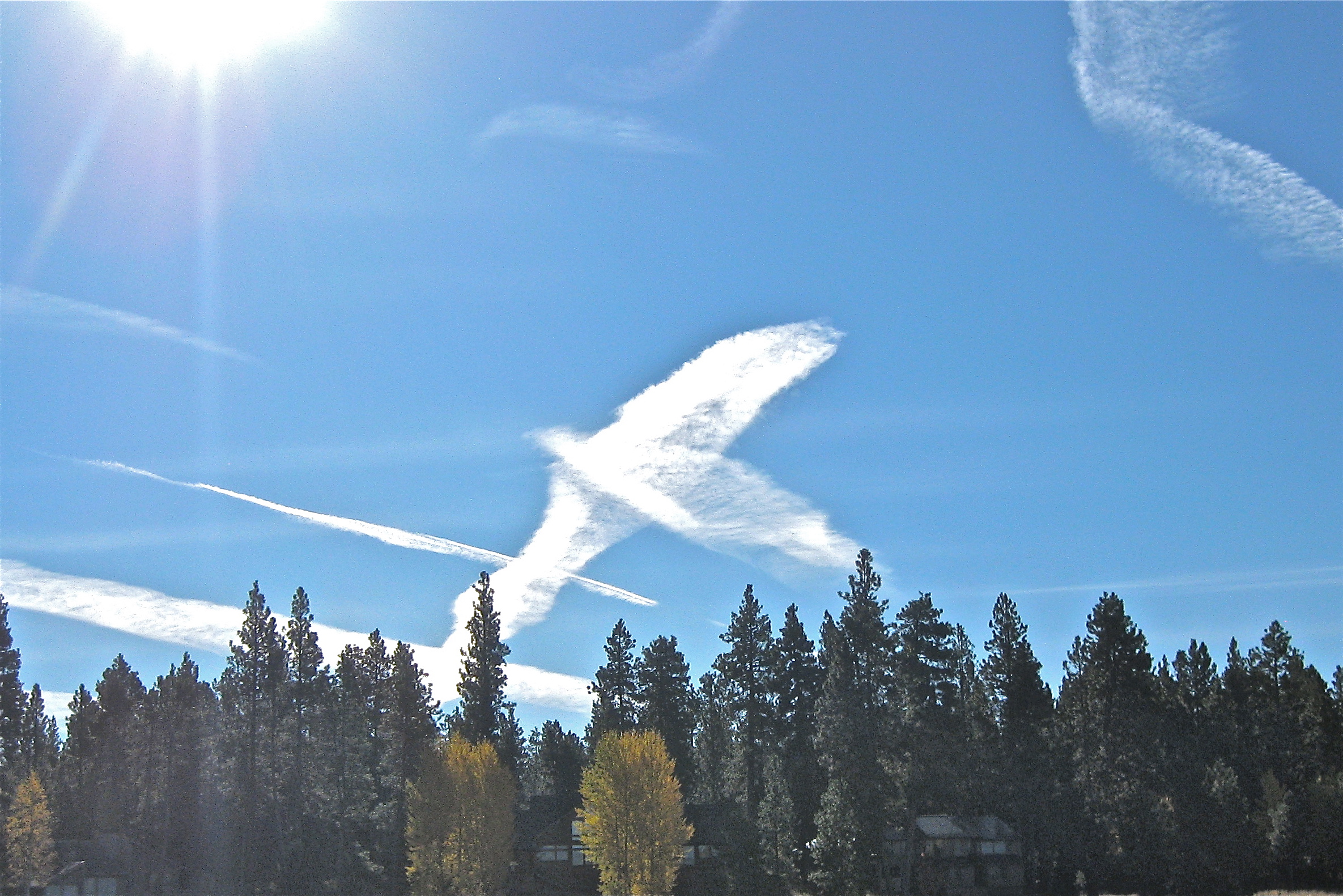
Clouds in Flight

Cloud in Flight

Clouds in Flight, Judy Hayden 2012

“Ah, yes, I remember it well”
Maurice Chevalier, in GiGi

Observations

I see and remember
through filters
of place and need,
hunger and fear,
time as instant as breath

You see a cloud
slide through the sky
I feel dragon’s breath
claim the ground
above the trees

Your wide-angle mind
grasps the world’s entirety
— so easy, you say —
it’s all clearly there
fully defined and framed

My mind cannot hold
virtual, visual
logic-formed snapshots,
all pixels in place

Darkroom details,
emotions, shapes,
visceral images
revealed in layers
are my truth

raw word-pictures,
mental music . . .
or
objects defined
by their given names . . .

we each see and say
our imprinted version
of reality as it never is

Michele M. Graf

This poem grew out of a discussion my husband and I had with friends, when we were each describing what we saw and did on part of our life on the road. How could two people come away with such different memories of the same shared event? One of the best parts of being married to one’s absolute opposite is laughing at all the ways we interpret “Life, the Universe, and Everything”. (Thank you Douglas Adams and the Hitchhiker’s Guide to the Galaxy.)

In June, I was co-presenter of the Eugene Public LIbrary Summer Reading Series Poetry Workshop and Showcase. Judy Hayden’s photography was on display as part of the celebration. I went wild when I saw her bird in flight cloud photo — the clearest image of what I’ve tried to explain about how I process the world. Sentimentally, watching cloudscapes and the moon were my special moments with my father when I was young.  Judy graciously agreed to share this magic image with the Poetic Muselings in this post.

A bit about Judy:  I see light and line, color and texture, gladly through my lens; both still and moving images in nature; blessings from the earth, sea, and sky. 

Inspiration for the cloud photo:  During my annual women’s retreat in Eastern Oregon, a time to laugh, cry, and nurture, this amazing bird-like image appeared briefly on our morning walk, bringing us much appreciated joy and inspiration.

Thank you, Judy, for capturing that bird, and allowing it to soar here! We hope to collaborate on other poetry-photo projects in the future, so watch for more.


When I was in eighth grade, the school held a writing contest for students to go to a local Young Writer’s Conference. The topic we had to write a story on was Get the Lead Out. I didn’t have any preconceptions of the phrase, so interpreted it how I wanted. Since writing my story, I’ve used the phrase to remind myself to just write. Here’s my story:

Get the Lead Out

My favorite teacher in Jr. High must have been Mr. Horace D. Wallington, my English teacher.  His favorite—and most often used—expression was “get the lead out”.  At first it was only another way to say get out your pencil and start writing.  At least that’s what it meant to me.  Now I can see that it means more than that.  Much, much, more . . .

“Mr. Wallington . . . Mr. Wallington!”

“Huh?” Mr. Wallington glanced up from the papers he was correcting and noticed Sarah standing beside his desk. “Is there anything I can help you with Sarah?”

“I’m having some trouble with that essay you asked us to write this morning.”

“You mean the one you’re supposed to write about your feelings on World War II.”

“Yea. That’s the one.”

“I’m surprised you even asked me about it. You’re usually so quiet in class that I never know whether you have any questions that need answering.”

“Well . . .”

“Why don’t you come in after school tomorrow and I’ll try to help you with it then.”

“Thanks a lot, Mr. Wallington.”

Sarah turned and headed towards the door.  As she was about to leave, Mr. Wallington called out “Write down everything you know about World War II and bring the paper in with you tomorrow.”

“Okay . . . Anything else?”

“No. That’s all.”

The next day Sarah was right on time.  As she went in, she saw that Mr. Wallington was alone in the classroom.  When he noticed that she had come in, he pulled one of the desks closer to his own.

He asked her to sit down and then sat down himself, perching on the edge of his desk. “Did you write the paper like I asked you to?”

“Yes, I have it right here.” Sarah handed him a small pile of papers.  He flipped through the papers then handed them back to her.

“I see that you have been listening in class.  What I don’t understand is if you know so much about World War II, then why are you having so much trouble writing your paper?”

“Well, I’m not exactly sure how to write it all out.”

“But you wrote it all down right here.”

“I know. It’s just that . . .”

“I think what you’re trying to say is that you’re not quite sure what your feelings are on the subject.”

“I guess you could put it that way.”

“Well, in this situation, my main advice is to just ‘get the lead out,’ as I would always say.”

“But what exactly do you mean when you say that?” Sarah asked earnestly.  “I always thought that it was a figure of speech to say get out your pencil and start working.”

“I suppose in a way it does mean that.  Yet it means more.  You know that lead compound could kill you. Don’t you?”

“Yes.”

“And if you get some in your system, then it’s best to get it out right away, correct?”

“Of course.  That’s the sensible thing to do.”

“Well, the lead is all that information stored up in you. It’s in there, somewhere, and you know you have to get it out.”

“So how am I to go about doing that?”

“ ‘Get the lead out.’ Get that pencil in your hands and just start writing. Let it go. Let it flow out of your system. Don’t force it; just let your hand do the talking. It will all come out, I promise.”

“It’s that easy?” the need for reassurance in her eyes.

Mr. Wallington smiled. “Why don’t you go home and find out for yourself.” He escorted her to the door and held it open for her. She started to walk down the hall, hesitated, and looked back.

“Thank you, Mr. Wallington. I’ll try my best to do as you said.”

“I expect to see that essay on my desk first thing in the morning.”

And it was. He was right. Once I just got down to it and let it all out, it was easy. Not only did I get an “A” on that paper, but my teacher entered it into a national contest, and it won. Here I am now, getting credit for it, but the award should go to him.

Thank you, Mr. Wallington, for the wonderful advice. And for explaining to me that simple phrase: “Get the Lead Out.”

mary-sig2


I’m a poet with a particular point of view. In these next blog posts I’ll post poems on different subjects from my point of view. Each poem is an expression, through me, of inspiration or Spirit or emotion. What you see in this light is what you bring to the poem.

What is it about talking? How you can say things but they don’t seem to reach others, and vice-versa. Here’s a poem I wrote about communication last September. I hope you enjoy it!


Talk, Talk, Talk

So many things we can’t say
to each other,
are we hiding the worst parts of ourselves
or the best?

Wearing my heart on my sleeve,
always.
I’m no poker face.
Everyone knows what I’m thinking,
even before I do.

But you…
a charming, un-scalable wall,
a good-natured mountain,
whose stone face
hides so much
pain.

We communicate best in gestures,
not words.
The words fail us,
filling up the space
like balloons,
ready to burst.

Where’s the damn pin?

© Anne Westlund

Come back on Friday, August 23rd for Make Visible: Summer of Creativity

“Make visible what, without you, might perhaps never have been seen.”~Robert Bresson, French Film Director


~~~

A few months back, I took an online songwriting course  with Pat Pattison. The course was given  by http://www.coursera.org an organization that allows anyone to enroll in free, online, university-level courses given through a number of institutions of higher learning.

One of the most interesting things I took away from the course was the notion of stable versus unstable. He argues that the number of lines, the line length contribute to the verse feeling either resolved (stable) or not (unstable). Even numbers of lines feel stable, uneven lines unstable.

So here is an experiment with a poem of mine.  Here is the original:

Traveling Man’s Blues

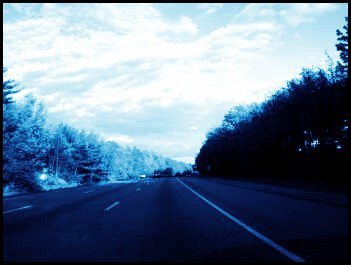
blueroad

It used to be that all you’d need to travel round the states
was a couple hundred bucks and nerve to tempt the fates
by sticking out your thumb. Then you could cruise to anyplace.
I was bitten by the traveling man’s blues.

I hitchhiked up to ski country and there I learned to ski.
I found a real nice place to stay, at least it seemed to be,
but after just a month or three they all got tired of me.
Now I’m caroling the traveling man’s blues.

I moved on to Connecticut to swim in Candlewood Lake.
I camped out in the summer. In the fall I tried to break
into a cozy cabin. Boy, was that a big mistake!
Now I’m studying the traveling man’s blues.

They threw me in the slammer for a year or two or three.
That was the end of traveling for quite some time for me,
but I’ll be out of here real soon. And then, to where? We’ll see.
I’m stilling mastering the traveling man’s blues.
and here is a version with three line stanzas

Traveling Man’s Blues

It used to be that all you’d need to travel round the states
was a couple hundred bucks and nerve to tempt the fates
by sticking out your thumb. Then you could cruise to anyplace.

I hitchhiked up to ski country and there I learned to ski.
I found a real nice place to stay, at least it seemed to be,
but after just a month or three they all got tired of me.
I moved on to Connecticut to swim in Candlewood Lake.
I camped out in the summer. In the fall I tried to break
into a cozy cabin. Boy, was that a big mistake!
They threw me in the slammer for a year or two or three.
That was the end of traveling for quite some time for me,
but I’ll be out of here real soon. And then, to where? We’ll see.
I’m stilling mastering the traveling man’s blues.


"Writing", 22 November 2008

I have a nine-year-old son and a husband who both love my attention. I know they both have Quality Time as one of their top love languages (and mine!), so it is important. However, this has made it even harder for me to write when others are around. My son wants to share, or do something with me. My husband comments “but you had all day to write”. So I tend not to write on weekends or breaks from school. Or if I do, I get cranky from all the interruptions. Then an event like NaNoWriMo comes around, or National Poetry Month. I think: this is important! I will make an exception. But the boys don’t see it that way. To them, it’s the same as every other day. So as the month goes by, I would do less challenges in evenings and weekends. Until I eventually stalled out altogether, feeling I wasn’t getting the support I needed.

I have since realized my mistake. It’s impossible to prove to someone that my writing is important if I don’t act like it is. I haven’t made it a priority. I can’t expect them to respect my writing time when I don’t respect it myself. When they don’t *see* me write. I put that to the test last April. Both husband and son were made aware that I was going to write a poem each day, and be spending time on the poetry forum, even on weekends and spring break. In return, my husband helped remind my son when I was working, and I got the space and support I needed. And it ended up being my most successful poetry month.

Now that it’s summer, I’ve put into the schedule for one hour of writing every week day. It’s not a perfect system yet. My kid is good with schedules, and has been giving me the hour when I ask for it. I need to be more consistent in doing so, and not wasting that hour when I do.

How do carve writing time for yourself? How do you convince those in your life that writing/creativity is important?

mary-sig2


Enhanced by Zemanta

write-picI’m a poet with a particular point of view. In these next blog posts I’ll post poems on different subjects from my point of view. Each poem is an expression, through me, of inspiration or Spirit or emotion. What you see in this light is what you bring to the poem.

These are memories from childhood. They aren’t strictly accurate, but they do capture the flavor of my childhood. Sometimes truth is more important than accuracy. Memory is a maze of images that we can get lost in easily. Try writing poems about your childhood. You’ll be surprised at what you come up with!

Car Trip

“It’s so hot,” Mom said for the 500th time,

Bubble gum melted like pink vinyl onto the back seat,
Dad pulled over, “Sir, you were doing at least
65” by the State Patrol—just a warning.
I threw up Hershey bars and Coke, carsick on my
Cousin Keith from Minnesota, we stopped at the “one
And only” reptile farm—snake shows and a 10
Foot python. We stayed at a motel that went nowhere,
Looked like a train, everyone saw Old Faithful except me,
I was in the Ladies room.
In Nevada we bought fireworks for the 4th, my brother
Exploded a cherry bomb in the toilet and stole
All the Dunes ashtrays.
My mom swore we’d never go on a trip like that again,
In our cool air-conditioned living room, while I played
Cards, a picture of the sunshine state on the backs.

Dad said “Next summer let’s go to Disneyland.”

© Anne Westlund


Come back on Friday, July 26th for Make Visible: Communication

“Make visible what, without you, might perhaps never have been seen.”~Robert Bresson, French Film Director


~~~