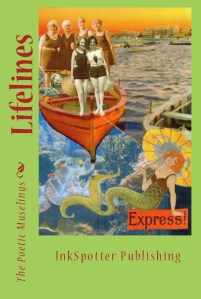
sharing a poetic LIFELINE with the world

Archive for the ‘Margaret’s Musing’ Category

Check out the first chapter of my new novel plus Sand in the Desert free on August 27-28

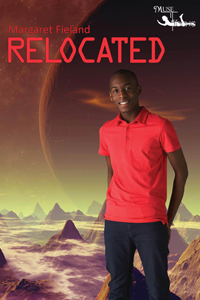
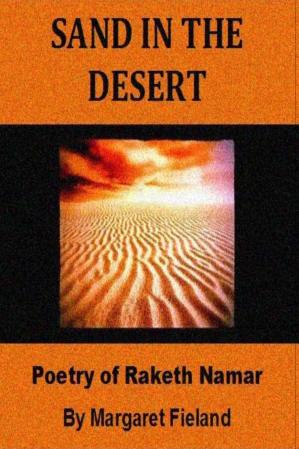
relocated-200x300sand_in_the_desert_cover_for_kindle


On Monday, August 20th,  the first chapter of my new novel, “Relocated,” was on D. Renee Bagby’s YA First Chapters blog.

Read it here:

http://ya.drb1stchp.com/2012/08/relocated-by-margaret-fieland.html

Sand in the Desert, the book of poetry that I wrote to go with “Relocated,” is free on Kindle on August  27th and 28th. Or borrow it free any time on KDP Select

http://tinyurl.com/SandPoetry

And do check out “Relocated,” available on Amazon and on the publisher’s website, http://tinyurl.com/MuseRelocated

Here’s a link to “Relocated” on the publisher’s webste:

http://tinyurl.com/Relocated


More on Limericks

Cover of "The Limerick"

Cover of The Limeric

I love rhyme. I love limericks, and I’ve written quite a few. Here, since I now have the perfect excuse,
are a few new ones.

Here’s one:

There once was a young lad from Kyoto
one evening while viewing a photo
saw a face so grotesque
it resembled a desk
and was sure he had seen Quasimodo.

and another:

One evening while cooking some rice,
a lass went to look for some ice.
When she failed to return,
the rice started to burn.
The poor lass had to cook her rice twice.

A note on meter in limerick:

The feet (metrical feet, not the things at the ends of your legs) for a limerick is typically an anapest
dum, dum, DUM or an amphibrach
dum DUM dum
with the first, third, and fifth lines consisting of three feet of three syllables each, and the third and fourth consisting of two metrical feet.

Edward Lear popularized the limerick,  but in contrast to modern limericks, they contain neither humor nor  a punch line, and the first and last lines were often the same.

http://en.wikipedia.org/wiki/Edward_Lear

Although Mr. Lear wrote some limericks
I’m thinking they really are gimmericks,
First and last lines the same
make them seem pretty lame.
and of humor there’s nary a glimmerick.

And here’s one about Massachusetts governor Deval Patrick:

Expressing intention to pass
on a third term, the governor of Mass
saw his influence ebb.
It’s all over the web.
Is he planning to seek greener grass?

My Voice

I’ve been thinking about voice a lot lately. Voice, as in writer’s voice, what is it, where does it come from, what influences it. As a writer, I love words and word play, have a good knowledge of English grammar, can speak, read and write French well enough to carry on a conversation, read a book, and appreciate some of the differences in the grammars. I enjoy humor and like writing all kinds of humorous poetry.

Many things have influenced me as a writer, but one of the biggest was my father. An attorney who appeared twice before the Supreme Court, he love the English language and was adamant about correct usage. Every time my sister or I would make a mistake, he would repeat the whole rule and its explanation. Not simply the correction. The whole, blasted thing. He also refused, generally, to give us the meaning of a word; he made us look them up ourselves. At the time I found the whole thing beyond annoying. Now I view it as one of the biggest gifts he could have given me.

He also encouraged us to read widely. I recall reading Damon Runyon and O’Henry among others at about age twelve, and having to look up about one word in every sentence. Talk about vocabulary building! And I can still recall discussions about points of grammar around the dinner table.

The New York Times crossword puzzle was another big influence, in that it led to my developing my own algorithm for generating rhymes. I am an auditory learner, and one day while doing the puzzle, searching for a word where I had the first letter, I realized that there were a very limited selection of sounds that could follow:
Consonant plus L sound: for example C plus L as in clap
Consonant plus R sound: for example C plus L as in crap
For some, Consonant plus W sound:   C plus W sound would be cwap — nope, that one’s not a word.
For S, C, and T: consonant plus H
For letter q: KW is the sound
Special case : S : S plus most of the others: S plus C , S plus C plus L, S plus C plus R…

But NOTE well.  We’re talking about SOUNDS, not spelling. I use C for the K sound.
If you’re visual and this throws you off, this system might not work for you. fat frat flat

I’ve used this algorithm for years. I love to rhyme, and although I now occasionally look up the rhymes using rhymezone.com, I can go through my own algorithm pretty quickly. I do better that way, because it forces me to contemplate each word and whether or not it would fit in the poem.

Although I love music and play the flute and the piccolo, I don’t listen to music as I write, nor do I see images when I listen to music. When I listen to music, I listen to music. It evokes emotions, but I don’t see pictures unreeling in my brain. I know some writers are inspired by music, like to write to music, and the like. I don’t, not in the way most people mean. I do find music to be very freeing when I’m letting my mind wander, contemplate plot, character, or whatever.

I have written several poems that were music-inspired. In  the cases I can remember, I was in my car listening to the radio when a particular song — or songs — got me started on a poem. Here is one of them. The first part of the first stanza was what was happening when the Kenny Chesney song started to play on the radio. I did have to go search out the titles of some of his other songs in order to fill out my conception of the poem. I’m nobly resisting the urge to revise it. It was published in an ezine:

Crack Up

Swish through car-lit darkness
Past squares of light,
street signs sparkling green and white.
Roll down your window,
feel the lemon air
ruffle what’s left of your hair.
Kenny Chesney blaring on the radio
loud enough to silence the thoughts in your head
waiting to be drowned in a cold beer.

Your wheels slide through ghosts of clouds,
past skeleton trees waving bare arms,
past lighted windows with families eating
roast chicken, green beans, potatoes
while the letter from your daughter
crinkles in your back pocket,
your seat belt chafing as
Kenny croons Who you’d Be Today.

The smell of leaf smoke drifts
through the window
as you drive at twenty-five miles per hour
past the cop in the turn-out on your left,
as the rain starts dripping down your windshield
and your windshield wipers quit.
You reach for a beer
as Kenny starts singing Keg in the Closet

Your car drifts into the center of the road
as you drop the empty on the floor,
reach behind you for another,
one hand on the wheel.
The car skids on wet leaves
going around that curve in the road
you forgot was there
and Kenny sings Steamy Windows.

The sweat drips down your neck
as you wrestle with the steering wheel,
brake on the empties,
your seat belt unfastened.
Skid into the tree.
Glass arrows your cheek your eye.
You’re bleeding from your ear.
Somewhere Kenny’s singing How Forever Feels.


Margaret’s Senryu

My Senryu, and fun with GIMP.

I’ve been having a blast lately playing with the color manipulation functions with GIMP, though I have yet to read the book I bought that goes through all the features. Consequently, I have a nice directory full of road photos, a great many of which I’ve played with using GIMP.

Last night Michele emailed me and asked me if I could take today’s blog post and create a Senryu. So I grabbed an image from my Pictures directory and wrote about it.


Night Road, photo by me, digital manipulation courtesy of GIMP

Night Road, photo by me, digital manipulation courtesy of GIMP

Night Road
Psychedelic sky
Dream made visible


Sand in the Desert: Putting Together a Poetry Collection

I am a way-back science fiction fan, but until November,  2010, I had never

written a science fiction story. The

The cover for my forthcoming poetry collection

truth is I had a phobia about it, mainly about the world-building, which in the abstract intimidated me.

Around September or October of 2010 I decided I would simply go for it and write a science fiction novel for NaNo.  I started with the world-building: the planet, the aliens, the Terran Federation, the aliens’ society, values, arts, politics (or lack thereof). I’d been mulling over several things for years: a society based on personal responsibility, and one where the “normal” relationships contained multiple partners and included same-sex relationships.  I continued happily outlining the society and the people. I noted down about a page about the plot, including the main character, his father, and a couple of others.  I decided to write a YA/MG sci fi novel.

For various reasons which I will not fully divulge, in case any of y’all decide to read the book, I needed my aliens to be distinctive but not outlandish. I needed them to have skin color that could be found here on earth, yet still be distinctive, so for this and a number of other reasons, one of them being that I was damned sick of the good guys always being white, I made my aliens, my main character, and his father Black.

I also wanted to participate in Robert Lee Brewer’s Poetic Asides November Chapbook challenge, so I conceived of a poet to tie the two together. One of my alien characters is a scholar, and my main character ends up studying the poems of my imaginary poet. Raketh Namar, the author of the poems, exists in the universe of the novel some five thousand years before the action of the book on planet Aleyne. Raketh Namar, the poet, was the author of one of the most sacred texts of my aliens, the Aleynis. I don’t usually write prayers or write about spiritual subjects, yet I found myself writing them without difficulty. Raketh Frey, the main character in the novel, studies these poems during the course of the action. Eight of the poems, noted in the acknowledgments, appear in the book.

In the universe of the novel, this collection of poems was translated into English Common Speech by two of the other characters in the novel, Ardaval Namar and Gavin Frey, the father of my main character, Raketh Frey. Aleynis do not translate their sacred texts, and this translation is therefore unusual.

 Having written the poems, I wanted to put together the collection and publish it, but having dilly-dallied for some time, I decided to self-publish. At the present time, I have a cover, designed by Karen Cioffi, and Michele Graf has edited the collection, including some valuable suggestions about the order of the poems.

All I have left to do is to hop over to CreateSpace and  put the whole thing into their system, and after that I have to decide on a price.

Here is one of the poems, one that does not appear in the book:

Ode to My Father

When I was very small child
he was as tall
as the stars.

When I was boy-high
he had shrunk
to the height of a large tree

When I became a man,
he shrank to the size
of a fist.

When I became a father,
he rose again.
His head touched the sky.

Now he is gone.
I take my small son
and point heavenward.

“There is your grandfather”

Taming the elusive Iamb

Note: In all of the following, I have indicated stressed syllables in bold.

Woods and Fields near my home

My woods and fields

An iamb is a two-syllable metrical foot where the stress is on the second syllable:

da dum

A trochee is a two-syllable metrical foot where the stress falls on the first syllable:

da dum

Robert Frost’s poem, “Stopping By Woods on a Snowy Evening” is composed of iambs:

Whose woods these are I think I know.
His house is in the village though;
He will not see me stopping here
To watch his woods fill up with snow.

For an example of dactyls check out Henry Wadsworth Longfellow‘s “Song of Hiawatha

Should you ask me, whence these stories?
Whence these legends and traditions,
With the odors of the forest,
With the dew and damp of meadows,

And now Michele’s first stanza:

We claim our fears and ghosts by what we do,
   paths drag us into, not by accident,
   territory steep in our deep taboo.*

*Note: there are several ways to read this line — this is one.

So, lines one and two consist of nothing but iambs, but line 3 starts with two trochees.

One way to figure out the meter is just what I have done above: read the lines aloud, then underline or bold the stressed syllables, then see what you have. Another is to clap as you read: clap on all the stressed syllables while at the same time keeping track of whether this matches your pattern.

Another is to imitate a well-known rhyme or song. One of the only successful rhymed stories I wrote followed the rhythm of a nursery rhyme (unfortunately I’ve forgotten which one). Here are the first couple of stanzas. Can you help identify the song or nursery rhyme I tried to follow?

Old Tom Troll
had a hole by a bridge,
not far from the River Dee,

a lonely hole
not fit for a Troll,
and full of damp debris.

So Old Tom Troll
went out for a stroll
to find new holes to see.

Old Tom Troll
had a hole by a bridge,
not far from the River Dee,

a lonely hole
not fit for a Troll,
and full of damp debris.

So Old Tom Troll
went out for a stroll
to find new holes to see.

Enhanced by Zemanta

Focus on Form: Villanelle

Welcome to Focus on Form. For the next three weeks, each of us Muselings will be writing a poem in the same form and sharing it here on the blog. 

Welsh poet Dylan Thomas

Welsh poet Dylan Thomas (Photo credit: Wikipedia)

Form

A villanelle is a 19th century form was originally a song/dance sung by a troubadour. The modern form developed in the 19th century.

Rules

A Villanelle is a a nineteen line poem consisting of five tercets and a concluding quatrain. It contains only two rhymes. The first and third line of each of the tercets and the first and final two lines of the concluding quatrain form one, and the middle lines of the tercets and the second line of the quatrain form the second.  In addition, the first and third lines of the first tercet are refrains. Thus. let A1, B1 A2 be the first tercet, and a small a or b indicate a line that rhymes with either the A lines or the B line, the poem lays out as:

A1, B1, A2    a3, b2, A1    a4, b3,A2    a4,b4,A1   a5,b5,A3    ,b5,A1,A2

In addition to the rhymes and the refrain,  in a classic villanelle, the lines themselves should be in iambic pentameter and the repeated lines be repeated without variation.

Tip: pay careful attention to the first stanza, and especially to the end words, as you will need to find a goodly number of rhymes for them.

Examples

Do Not Go Gentle Into That Good Night
Dylan Thomas (1914-1953)

Do not go gentle into that good night,
Old age should burn and rage at close of day;
Rage, rage against the dying of the light.

Though wise men at their end know dark is right,
Because their words had forked no lightning they
Do not go gentle into that good night.

Good men, the last wave by, crying how bright
Their frail deeds might have danced in a green bay,
Rage, rage against the dying of the light.

Wild men who caught and sang the sun in flight,
And learn, too late, they grieved it on its way,
Do not go gentle into that good night.

Grave men, near death, who see with blinding sight
Blind eyes could blaze like meteors and be gay,
Rage, rage against the dying of the light.

And you, my father, there on the sad height,
Curse, bless me now with your fierce tears, I pray.
Do not go gentle into that good night.
Rage, rage against the dying of the light.


One Art
Elizabeth Bishop (1911-1979)

The art of losing isn’t hard to master;
so many things seem filled with the intent
to be lost that their loss is no disaster.

Lose something every day. Accept the fluster
of lost door keys, the hour badly spent.
The art of losing isn’t hard to master.

Then practice losing farther, losing faster:
places, and names, and where it was you meant
to travel. None of these will bring disaster.

I lost my mother’s watch. And look! my last, or
next-to-last, of three loved houses went.
The art of losing isn’t hard to master.

I lost two cities, lovely ones. And, vaster,
some realms I owned, two rivers, a continent.
I miss them, but it wasn’t a disaster.

–Even losing you (the joking voice, a gesture
I love) I shan’t have lied. It’s evident
the art of losing’s not too hard to master
though it may look like (Writeit!) like disaster.

My own try:

This poem comes from Robert Lee Brewer’s PAD challenge for April 18th: take a regional cuisine and make it the title of the poem

Southern Fried Chicken

A chicken fried in oil’s a wonderous thing
so spicy, crispy, crunchy with a golden crust
You’ll take a bite. Your mouth will want to sing.

Add salt, paprika for that special zing.
A pinch of jalapeno is a must.
A chicken fried in oil’s a wonderous thing

The spicy pepper adds a bit of bling
to penetrate the chicken’s flesh.  I trust
you’ll take a bite. Your mouth will want to sing.

The oil must be hot so you can bring
the crust to crispness. As we have discussed,
a chicken fried in oil’s a wonderous thing

Keep clear of boiling oil. It will sting.
If oil becomes too hot it may combust.
You’ll take a bite. Your mouth will want to sing.

At last the chicken’s ready, and you spring
to action, find the flavor most robust.
A chicken fried in oil’s a wonderous thing
You’ll take a bite. Your mouth will want to sing.

Your Turn

Now I open it up to you. I welcome any feedback on my poem, as long as it is constructive and not destructive. Let’s help each other improve.

I’d love to see your own attempts at the form as well. You can post them in the comments here, or on future posts, or link to your poem if it’s on a separate site.
 

Enhanced by Zemanta

Report from the Mass Poetry Festival


Swirls Four
Medium: Mouse on mousepad
Artist: Margaret Fieland

Painted Rectangles
Medium: Mouse on Mousepad
Artist: Margaret Fieland

This past weekend I attended the Mass Poetry Festival, which took place this past Friday, Saturday, and Sunday. I skipped Friday, but I did  attend both Saturday and Sunday.

Back when the event was in the planning stages, I got an email about a reading of poetry from their books by Massachusetts authors who had published a book of poetry in 2011. I hesitated — “Lifelines” was written by six of us, and I was “sure” they’re reject me — but sent in my information anyway.

They said yes, illustrating yet again my father’s maxim, “nothing ventured, nothing gained.”  I hope I remember this: not to assume I will be rejected simply because something is a reach or is out of my comfort zone.

I was part of the Sequential Poetry Reading for poets with new books of poetry that appeared in 2011.  The reading started at Noon on Saturday and lasted until 2:40. We were told that we each would have eight minutes to read, but we had a couple of no-shows, so we each had ten minutes.

The reading went well. The audience included us poets and about an equal number of what I expect were friends or family. It was a real treat to be be able to listen to the poets reading from their own work. A good many (most) of them simply read from a copy of their book. I might have done the same except for Michele’s excellent advice to print out what I wanted to read in LARGE, DARK type, and to practice. I did both, and I was very glad I did. Michele also suggested alternating dark and light poems.  I doubt that, left to my own devices, I’d have thought of this either.

There  were a long list of workshops taking place all three days of the festival, and we were encouraged to sign up in advance. I did sign up for several things, but as it turned out, simply walking into the workshop was generally good enough. I suspect the pre-sign-up thing was to figure out expected attendance at the workshop in order to facilitate room assignments, number of handouts, and the like. Next year, I will attempt to sign up for what interests me, but I won’t be a slave to the schedule.

The workshops themselves were tremendous fun. I arrived Saturday morning, signed in, got a copy of the workshops and a map, and by that time it was a bit too late for me to get to much in the way of workshops, so I ended up going to a couple of the art activity things that had been set up with kids in mind.

I *love* art activities — my mother was an artist who specialized in portraits. I was hugely energized by the art projects, and ended up spending several hours Saturday evening after I returned home playing with MS paint. I didn’t get much sleep Saturday night — MS paint is hugely addicting, and I was pretty pumped up from the festival — so I considered skipping Sunday. In the end, I decided that I would just main line coffee and go for it.

Good decision. The first workshop I attended was given by someone I know. He’s a kick-ass teacher, and I had signed up for the workshop. Not only was the workshop very good, but the attendees, as is often the case with Tom’s workshops, were equally interesting. Several of us exchanged email addresses, and I hope we will keep in touch.

There was also a  lit mag and small press event, and I bought several journals and a book of poetry, collected flyers from some of the lit magazines. I’m reluctant to order off the internet for magazines I’ve never had a chance to look over in person, so I was delighted to have the opportunity to pick up some of the ones I was interested in. The poetry book is a book with poetry in French on one side and a translation by Marilyn Hacker on the other. I find reading modern poetry in French a challenge, so I welcome the opportunity to, first, cover up Marilyn’s translation and simply read the poems in French, and eventually, to read her translation as well.

I didn’t stay for the Saturday night headliners — they started at 7:30 — but the Sunday headliners started at 2:15, so I did go to that. The readers were Frank Bidart, Martha Collins, and Stephen Dunn. Stephen Dunn is one of my favorite poets. I  knew two of the poems he read.

What engages me as a reader and writer of poetry is conciseness and precision in language, the sound of the words themselves, their cadence. Freshness of imagery. A sense of humor. A poem that forces me to take another look at the familiar, evocation of emotion.

Here is one of the poems he read — one of the two I recognized:
What Goes On
by Stephen Dunn

After the affair and the moving out,
after the destructive revivifying passion,
we watched her life quiet

into a new one, her lover more and more
on its periphery. She spent many nights
alone, happy for the narcosis

of the television. When she got cancer
she kept it to herself until she couldn’t
keep it from anyone. The chemo debilitated
and saved her, and one day

her husband asked her to come back —
his wife, who after all had only fallen
in love as anyone might
who hadn’t been in love in a while —

and he held her, so different now,
so thin, her hair just partially
grown back. He held her like a new woman

and what she felt
felt almost as good as love had,
and each of them called it love
because precision didn’t matter anymore.

And we who’d been part of it,
often rejoicing with one
and consoling the other,

we who had seen her truly alive


Enhanced by Zemanta

Focus on form: My Aragman

Tuesday, Mary posted about a new form, Aragman:

here is a quick recap

Pick a word or words, and generate anagrams by going to http:// wordsmith.org/anagram and generating a list

Pick some anagrams. They form lines 1, 3, and 5 of your stanza.

Complete the phrases in lines 2, 4, and 6.

The very last line of the poem is another anagram.

Hint: check out the parameters for advanced search.  The word I chose,  perturbations, had an overwhelmingly large number of anagrams, so I first generated the word list  — simply a list of all the words that can be generated from Perturbations. There were over 1400 of them. Then I picked a few,  and went back to the advanced options, inserting the word I picked and generating all the anagrams with that word.

Here are some of the anagrams I liked — some of them made it into my poem:

Spurn Abettor I
Spurn beat riot
Obstinate Purr
Protuberant Is
Interrupt Boas
Abrupt Stonier
Abrupt Orients
Parson tribute
Repair Buttons
Uproars bitten
Bare tint pours
A Burrito Spent
Bare Iron Putts
Barter tin opus
Boater tips urn

and here are some of the words:

Protuberant
Interrupts
Reputation
Stationer
Terrapins
Abruptest
Obstinate
Transpire
Rapturise
Interrupt
Baritones
Printouts
Prostrate
Patronise
Restraint
Unbaptise
Atropines
Transport
Eruptions
Serration
Portraits
Patterns
Superior
Urinates
Trustier
Nitrates
Eruption
Portrait
Abettors
Transept
Portents
Patients
Notarise
Strainer
Tarriest
Anterior
Pertains
Puritans
Baronies
Snottier
Straiten
Subpoena
Unripest
Urbanest
Raptures
Robuster
Unpraise
Reprints
Petunias

Here is my Aragman

Perturbations

Typdom, Buchstabenspiel in Kreuzwortmanier, al...

Typdom, Buchstabenspiel in Kreuzwortmanier, alte Ausgabe von etwa 1930 (Photo credit: Wikipedia)

Uproars bitten
create havoc
Top Sun Arbiter
taken in custody
Repairs button
torn in riot

Bare iron puts
dent in car
Boater tips urn
douses new mayor
Urban spite tore
our city apart

I spurn abettor

Enhanced by Zemanta

The Artist’s Way, an interim Report

The Artist's Way: A Spiritual Path to Higher C...

The Artist’s Way book cover

The Artist’s Way is a book by Julia Cameron which turned into a movement on tapping into on creative potential. The book is divided into twelve chapters, one each week for twelve weeks. The core of the practice is the morning pages, 750 words that one is supposed to write longhand first thing every morning, and the artists date, a date with oneself to do something to nurture one’s creativity.

I have been through the book before. At the time, I did write longhand, although I usually fell short of three pages. I did write them fairly early in the morning. Now however knowing the limits of my concentration and my major, major dislike of writing anything by hand, I signed up with a website , 750words.com. The site is meant for morning pages and the like– not a blog, stuff is private, but it keeps you on track by

  1. Emailing you a reminder every morning,
  2. Keeping a count at the bottom of the screen so I can see your progress towards 750 words, and
  3. Awarding points for successfully doing ones pages 4. stats — it tells me how fast I types, how many words per minute, etc –
  4. Statistics.It tells me how fast many words per minute I typed, and the like.

I find the statistics surprisingly motivating. I’m a pretty fast typist, and when I’ve finished my allotment, I take a look at how long it took me and what my words per minute rate was. My rate is generally pretty consistent.

I’m finding that the discipline of having to produce 750 words is a key, for me, to tapping into creativit part of the experience for me. It’s long enough so that I have to find a fair amount of stuff to blurt out, which means I actually have to dig down and figure out what’s on my mind. I know that I’m not going consistently produce 750 words/three pages if I wrte them by hand, so in spite of the fact that writing by hand taps into a different area of the brain than typing, this is the best solution for me . I don’t delete the reminder until I’ve completed my pages.

As to the artists date, last time I went thru the book, I was convinced that the artists date had to be something big, and I never seemed to get to it. This time I know it can be something simple, like treating my self to a trip to the bookstore, or following thru on my commitment to get to yoga..

How is it going so far? Last week I went to the bookstore and loved over a book I was thinking of buying, spending an hour or so drinking coffee and reading the first chapter. I decided to borrow it from the library. This week, I followed through on my commitment to go to yoga. I’ve been twice this week to the Ashram around the corner. They have loads of classes, some of them free, and great instructors.I’m also finding that the discipline of producing 750 words every morning is making it easier for me to decide what to write.

Here is a link to an online community devoted to Julia Cameron’s ideas:

http://juliacameronlive.com/

Enhanced by Zemanta