sharing a poetic LIFELINE with the world

Archive for the ‘Creativity’ Category

This Writer’s Comfort Food

Red Vines

Red Vines (Photo credit: Incase.)

The right treat can be a perfect break from your creative session. While I write, I like things like Red Vines, nuts, chocolate, crackers. As a reward for a good session, it’s nice to have something richer to treat myself with. Here’s two of my favorite recipes. One on the healthier side, and one on the indulgent. Both tasty.

First off, my recipe for banana muffins. Don’t remember which online site I got the original recipe from. I like that this recipe only takes one banana. Perfect for using up an overripe banana. Bananas also freeze great for this purpose. Defrost in your fridge, cut off an end, and squeeze it out like toothpaste. No mushing necessary!

Banana Muffins

  • 1 cup flour
  • 1 1/4 tsp baking powder
  • 1/4 tsp baking soda
  • 1/4 tsp salt
  • 1/2 tsp cinnamon
  • 1/4 cup margarine
  • 1/2 cup sugar
  • 1 egg
  • 3 TB milk
  • 1/2 cup mashed banana (1 banana)
  1. In small bowl mix flour, baking powder, baking soda, salt, and cinnamon.
  2. In separate bowl cream margarine and sugar; add eggs and mix until smooth. Stir in milk and banana. Mix well.
  3. Fold in flour mixture.
  4. Spray muffin tins with PAM. Fill tins 2/3 full.
  5. Bake in preheated 350 degree oven for 20 minutes.

Note: This makes about 16 muffins, so I do have to do two batches. The big batch is great for pot lucks too.

The other recipe I’m sharing is more recently discovered. I’ve only made them twice, but they are by far the best cookies I’ve made. Discovered through Pinterest, the original recipe can be found here.

White Chocolate Snickerdoodles

  • 1 cup butter
  • 1 1/2 cups sugar
  • 2 eggs
  • 2 3/4 cups flour
  • 2 tsp cream of tartar
  • 1 tsp baking soda
  • 1/2 tsp salt
  • 2 TB sugar
  • 1 tsp cinnamon
  • white chocolate chips
  1. Mix together flour, cream of tartar, baking soda, and salt together. Set aside.
  2. Cream together sugar and butter. Add eggs and blend well.
  3. Add dry ingredients to wet ingredients and mix well. Add chips (use as many as you think are good, but I do about half a bag.)
  4. Shape dough into 1 inch balls and roll in the cinnamon-sugar mixture.
  5. Place 2 inches apart on ungreased cookie sheet.
  6. Bake for 8-10 minutes at 350 degrees. (Makes about 4 dozen cookies)

Note: If dough is too sticky, or cookies are too flat, add more flour.


What do you like to snack on to give you a needed boost during your creative sessions?

mary-sig2

What is a poem?

718660742_2566843587_02
What is a poem? Do you only believe it’s poetry if it rhymes? Has line and stanza breaks? What about prose poems?

Confession time: Yes, yes, I know, poetry is compress language, rich imagery, and prose poems are alive and well. But as for me …

Retro

However much I beat myself over the head, reread the definition, stare into space. compose metaphors based on motes of house dust as they drift down in the slow breeze generated by the fireplace insert, I am unable to convince myself there is such a thing as prose poetry, and, reading this over, I know exactly where I would place the line breaks, and the part of me that turns up its poetic nose at free verse wants to go back and make this rhyme.


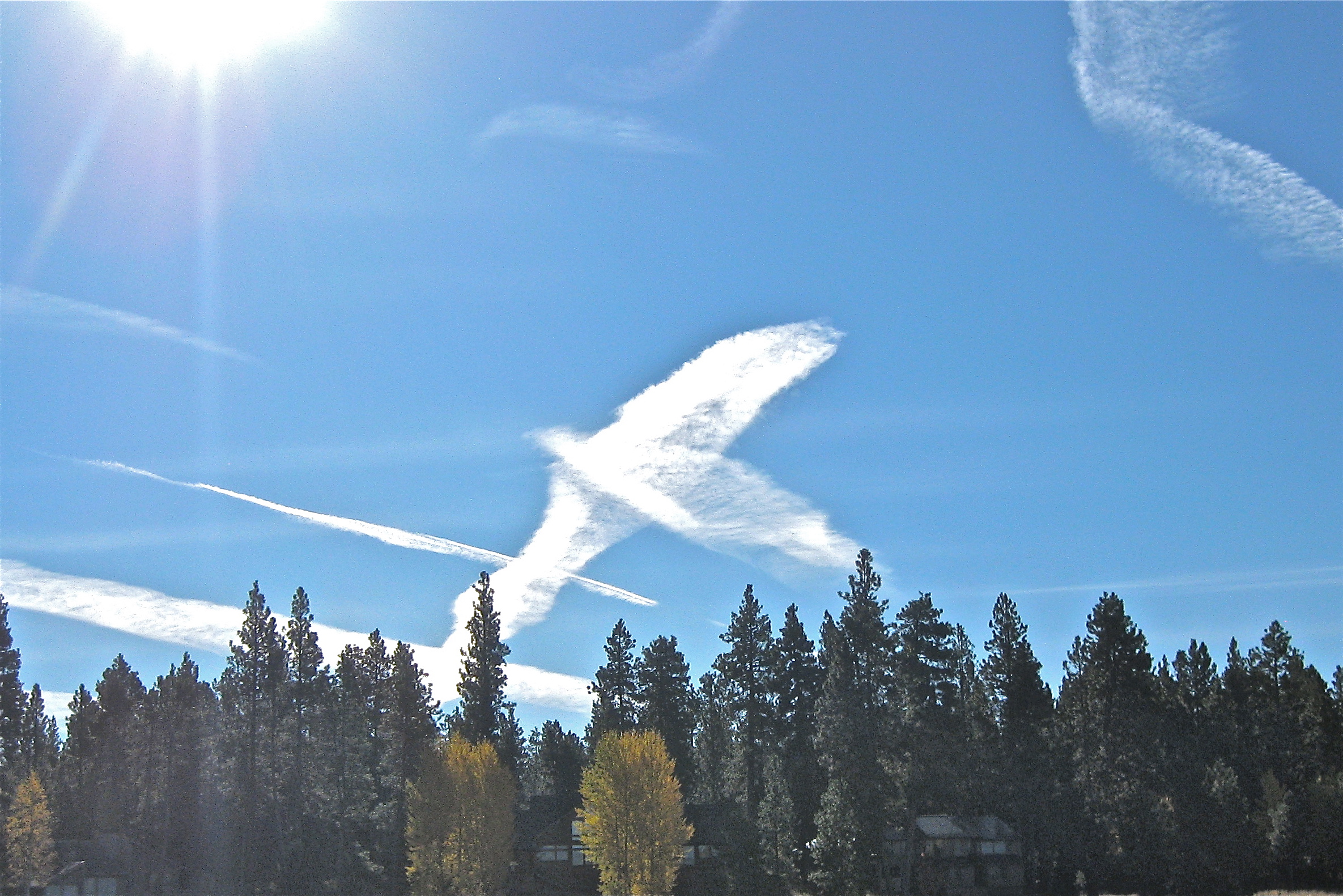
Clouds in Flight

Cloud in Flight

Clouds in Flight, Judy Hayden 2012

“Ah, yes, I remember it well”
Maurice Chevalier, in GiGi

Observations

I see and remember
through filters
of place and need,
hunger and fear,
time as instant as breath

You see a cloud
slide through the sky
I feel dragon’s breath
claim the ground
above the trees

Your wide-angle mind
grasps the world’s entirety
— so easy, you say —
it’s all clearly there
fully defined and framed

My mind cannot hold
virtual, visual
logic-formed snapshots,
all pixels in place

Darkroom details,
emotions, shapes,
visceral images
revealed in layers
are my truth

raw word-pictures,
mental music . . .
or
objects defined
by their given names . . .

we each see and say
our imprinted version
of reality as it never is

Michele M. Graf

This poem grew out of a discussion my husband and I had with friends, when we were each describing what we saw and did on part of our life on the road. How could two people come away with such different memories of the same shared event? One of the best parts of being married to one’s absolute opposite is laughing at all the ways we interpret “Life, the Universe, and Everything”. (Thank you Douglas Adams and the Hitchhiker’s Guide to the Galaxy.)

In June, I was co-presenter of the Eugene Public LIbrary Summer Reading Series Poetry Workshop and Showcase. Judy Hayden’s photography was on display as part of the celebration. I went wild when I saw her bird in flight cloud photo — the clearest image of what I’ve tried to explain about how I process the world. Sentimentally, watching cloudscapes and the moon were my special moments with my father when I was young.  Judy graciously agreed to share this magic image with the Poetic Muselings in this post.

A bit about Judy:  I see light and line, color and texture, gladly through my lens; both still and moving images in nature; blessings from the earth, sea, and sky. 

Inspiration for the cloud photo:  During my annual women’s retreat in Eastern Oregon, a time to laugh, cry, and nurture, this amazing bird-like image appeared briefly on our morning walk, bringing us much appreciated joy and inspiration.

Thank you, Judy, for capturing that bird, and allowing it to soar here! We hope to collaborate on other poetry-photo projects in the future, so watch for more.


Make Visible: Communication

I’m a poet with a particular point of view. In these next blog posts I’ll post poems on different subjects from my point of view. Each poem is an expression, through me, of inspiration or Spirit or emotion. What you see in this light is what you bring to the poem.

What is it about talking? How you can say things but they don’t seem to reach others, and vice-versa. Here’s a poem I wrote about communication last September. I hope you enjoy it!


Talk, Talk, Talk

So many things we can’t say
to each other,
are we hiding the worst parts of ourselves
or the best?

Wearing my heart on my sleeve,
always.
I’m no poker face.
Everyone knows what I’m thinking,
even before I do.

But you…
a charming, un-scalable wall,
a good-natured mountain,
whose stone face
hides so much
pain.

We communicate best in gestures,
not words.
The words fail us,
filling up the space
like balloons,
ready to burst.

Where’s the damn pin?

© Anne Westlund

Come back on Friday, August 23rd for Make Visible: Summer of Creativity

“Make visible what, without you, might perhaps never have been seen.”~Robert Bresson, French Film Director


~~~

Using stanzas to enhance your poetry

A few months back, I took an online songwriting course  with Pat Pattison. The course was given  by http://www.coursera.org an organization that allows anyone to enroll in free, online, university-level courses given through a number of institutions of higher learning.

One of the most interesting things I took away from the course was the notion of stable versus unstable. He argues that the number of lines, the line length contribute to the verse feeling either resolved (stable) or not (unstable). Even numbers of lines feel stable, uneven lines unstable.

So here is an experiment with a poem of mine.  Here is the original:

Traveling Man’s Blues

blueroad

It used to be that all you’d need to travel round the states
was a couple hundred bucks and nerve to tempt the fates
by sticking out your thumb. Then you could cruise to anyplace.
I was bitten by the traveling man’s blues.

I hitchhiked up to ski country and there I learned to ski.
I found a real nice place to stay, at least it seemed to be,
but after just a month or three they all got tired of me.
Now I’m caroling the traveling man’s blues.

I moved on to Connecticut to swim in Candlewood Lake.
I camped out in the summer. In the fall I tried to break
into a cozy cabin. Boy, was that a big mistake!
Now I’m studying the traveling man’s blues.

They threw me in the slammer for a year or two or three.
That was the end of traveling for quite some time for me,
but I’ll be out of here real soon. And then, to where? We’ll see.
I’m stilling mastering the traveling man’s blues.
and here is a version with three line stanzas

Traveling Man’s Blues

It used to be that all you’d need to travel round the states
was a couple hundred bucks and nerve to tempt the fates
by sticking out your thumb. Then you could cruise to anyplace.

I hitchhiked up to ski country and there I learned to ski.
I found a real nice place to stay, at least it seemed to be,
but after just a month or three they all got tired of me.
I moved on to Connecticut to swim in Candlewood Lake.
I camped out in the summer. In the fall I tried to break
into a cozy cabin. Boy, was that a big mistake!
They threw me in the slammer for a year or two or three.
That was the end of traveling for quite some time for me,
but I’ll be out of here real soon. And then, to where? We’ll see.
I’m stilling mastering the traveling man’s blues.


Witness to the Art and Dedication

"Writing", 22 November 2008

I have a nine-year-old son and a husband who both love my attention. I know they both have Quality Time as one of their top love languages (and mine!), so it is important. However, this has made it even harder for me to write when others are around. My son wants to share, or do something with me. My husband comments “but you had all day to write”. So I tend not to write on weekends or breaks from school. Or if I do, I get cranky from all the interruptions. Then an event like NaNoWriMo comes around, or National Poetry Month. I think: this is important! I will make an exception. But the boys don’t see it that way. To them, it’s the same as every other day. So as the month goes by, I would do less challenges in evenings and weekends. Until I eventually stalled out altogether, feeling I wasn’t getting the support I needed.

I have since realized my mistake. It’s impossible to prove to someone that my writing is important if I don’t act like it is. I haven’t made it a priority. I can’t expect them to respect my writing time when I don’t respect it myself. When they don’t *see* me write. I put that to the test last April. Both husband and son were made aware that I was going to write a poem each day, and be spending time on the poetry forum, even on weekends and spring break. In return, my husband helped remind my son when I was working, and I got the space and support I needed. And it ended up being my most successful poetry month.

Now that it’s summer, I’ve put into the schedule for one hour of writing every week day. It’s not a perfect system yet. My kid is good with schedules, and has been giving me the hour when I ask for it. I need to be more consistent in doing so, and not wasting that hour when I do.

How do carve writing time for yourself? How do you convince those in your life that writing/creativity is important?

mary-sig2


Enhanced by Zemanta

Make Visible: Childhood

write-picI’m a poet with a particular point of view. In these next blog posts I’ll post poems on different subjects from my point of view. Each poem is an expression, through me, of inspiration or Spirit or emotion. What you see in this light is what you bring to the poem.

These are memories from childhood. They aren’t strictly accurate, but they do capture the flavor of my childhood. Sometimes truth is more important than accuracy. Memory is a maze of images that we can get lost in easily. Try writing poems about your childhood. You’ll be surprised at what you come up with!

Car Trip

“It’s so hot,” Mom said for the 500th time,

Bubble gum melted like pink vinyl onto the back seat,
Dad pulled over, “Sir, you were doing at least
65” by the State Patrol—just a warning.
I threw up Hershey bars and Coke, carsick on my
Cousin Keith from Minnesota, we stopped at the “one
And only” reptile farm—snake shows and a 10
Foot python. We stayed at a motel that went nowhere,
Looked like a train, everyone saw Old Faithful except me,
I was in the Ladies room.
In Nevada we bought fireworks for the 4th, my brother
Exploded a cherry bomb in the toilet and stole
All the Dunes ashtrays.
My mom swore we’d never go on a trip like that again,
In our cool air-conditioned living room, while I played
Cards, a picture of the sunshine state on the backs.

Dad said “Next summer let’s go to Disneyland.”

© Anne Westlund


Come back on Friday, July 26th for Make Visible: Communication

“Make visible what, without you, might perhaps never have been seen.”~Robert Bresson, French Film Director


~~~

Using Music to set A Mood

wp_20130517_002
A recent post  on MuseItUp Publishing’s blog on using music  to set a mood set me to considering the subject. Although I don’t usually listen to music when I write — I’m a serious amateur musician and often find myself listening to the music — I do make use of musical references in the poems I write.

I’ve written more than one poem containing references to popular songs. In Crack Up, the first poem below, I was listening to the radio when a Kenny Chesney song came on, and I started composing the poem below in my head. I ended up on Kenny’s website looking for the songs I needed to complete the poem as I envisioned it.

In the second poem, Green Peas, I was already very familiar with the songs involved, and hopefully y’all are, too.

Do you listen to music while you work? How do you use musical references in your own writing, and how do you react to them in the writing of others? Leave a comment and let me know.

Crack Up

Swish through car-lit darkness
Past squares of light,
street signs sparkling green and white.
Roll down your window,
feel the lemon air
ruffle what’s left of your hair.
Kenny Chesney blaring on the radio
loud enough to silence the thoughts in your head
waiting to be drowned in a cold beer.

Your wheels slide through ghosts of clouds,
past skeleton trees waving bare arms,
past lighted windows with families eating
roast chicken, green beans, potatoes
while the letter from your daughter
crinkles in your back pocket,
your seat belt chafing as
Kenny croons Who you’d Be Today.

The smell of leaf smoke drifts
through the window
as you drive at twenty-five miles per hour
past the cop in the turn-out on your left,
as the rain starts dripping down your windshield
and your windshield wipers quit.
You reach for a beer
as Kenny starts singing Keg in the Closet.

Your car drifts into the center of the road
as you drop the empty on the floor,
reach behind you for another,
one hand on the wheel.
The car skids on wet leaves
going around that curve in the road
you forgot was there
and Kenny sings Steamy Windows.

The sweat drips down your neck
as you wrestle with the steering wheel,
brake on the empties,
your seat belt unfastened.
Skid into the tree.
Glass arrows your cheek your eye.
You’re bleeding from your ear.
Somewhere Kenny’s singing How Forever Feels.


Green Peas, A poem-song

1. Mom: Tune: Greensleeves

Alas my son you know it’s wrong
to leave the table discourteously.
Don’t give me “pretty please,” come along.
Sit down and finish your green peas.

2: Son: Tune: Red River Valley

How can you serve these peas, knowing
I hate them; I’ve told you six times.
Don’t give me that stuff about growing.
You must think that I’m still a child!

3: Sister: Tune: Sixteen Tons

Sixteen year old, is this what I get?
If you want to chase me out, well, now you’re all set.
If Peter calls, just say I’m out, that’s all you know.
Can’t stay another minute, Mom, I’ve got to go.

4: Dad: Tune: Good King Wenceslas

What’s this fighting all about?
Please give me a reason.
Everyone can hear you shout
clear over at the Gleason’s.

Give him a break just for tonight,
you are being cruel.
All you do is scream and shout.
I think you’re a fool.

5: Mom: Tune: Greensleeves

Green peas were for the boy,
but green peas aren’t worth a fight.
Green peas have brought no joy.
Forget about eating those green peas.


Why and How I Write Poetry

On June 1 and 8 this year, I co-presented a two-part poetry workshop at the Eugene Public Library, as part of their Summer Series. I described the method of my madness about a couple of poems I’d written recently, and some of my Poet’s Toolbox techniques that helped me polish the poems. Let me know what you think, and any other tools you could share to help others. I finished this portion of the workshop with a very different poem — much lighter.

Inside My Head:

I see the world in images, flashes that bounce around in my head, the equivalent of “ear worms” – a brilliant term I read recently that describes snatches of songs that pop into consciousness and won’t let go – usually until shoved aside by a new ear worm.

I also feel the world viscerally. Words can choke me, make the hair on my arms stand up, surge through my gut like a gallon of bile, leave me speechless with tears – any number of physical, emotional, and/or mental reactions that sneak up to replay unexpectedly, any time, anywhere.

Words and images power my life, clutter my brain, and beg to be put to paper if I ever hope to understand and process them. I will share three poems, the first two described below. Poem #3 is a change-of-pace / true slice-of-life about the bossiest member of my family.

About these Poems:

In April, Annette Funicello, died. I watched the Mickey Mouse Club as a kid, but I had no fan connection to Annette, and read the first obits without any sense of loss of someone I’d miss.

I knew she had MS, but no clue about how completely her form of the disease devastated. Then I followed a link and watched a short clip showing what her life had been like, having lost most of her ability to even communicate. She resembled a sloppy rag-doll version of her former self.

After the clip was made, she went into a coma and was kept in that state for “several years”. I was haunted by the images, her extended coma, and why, ultimately, the plug was pulled. Two poems, Why No Mercy? and And The Answer Is …, are my attempt to make sense of it.

The Tool Box:

1. My CRITIQUE GROUPS said my images were confusing, when I shared my original poem; they didn’t know if I was talking about a person or an animal. Didn’t get the terrible core – how I was now aware of yet one more way we can die while being forced to keep breathing. After my revision and edits, I read them again to my Crit Groups to see if I’d fixed the problems.

2. I used a partial “LEAPFROG” or “LEAPING POETRY” effort with the poems, looked at each line, image, phrase; the sequence and flow; to dig deep for the truth of what I was trying to say. Sometimes I must write so I can excavate the words for the critical essence, figure out how the parts fit, and fashion bridges to connect what is known with what is missing. Sometimes the results have little in common with the original poem, except the heart.

(There are multiple approaches to Leaping Poetry – most bordering on deep surrealistic juxtapositioning of images, the conscious and unconscious minds, etc. The simpler one, my method, is to look inside each image and phrase, then “leap” to what it conjures up, to see if that’s closer to what I want to say. The new image or phrase replaces the previous one, thus “leaping” closer to my target.)

3. “…Mercy…” became a PERSONA poem, written from the narrator’s point of view, changed from third-person (outside) to first-person (inside the poem).

4. Where possible, I edited to present tense for a sense of immediacy.

5. These are PHOTO/ART poems, inspired by the video described above.

6. Both were written for PROMPTS (to write a Hunter poem and a Hunted poem) during the April 2013 Poem A Day (PAD) Challenge on Robert Brewer’s Poetic Asides. (Link below)

7. I REVISED for content, then EDITED to polish the poems.

8. I READ MY POEMS ALOUD several times before they reached the current version, to see how the words flowed (or didn’t), pacing, and “mouth feel”.

Revise and Conquer: 

 Revision is not a dirty word – it’s the first step to clarity. None of the tools in my arsenal could be used until the words were down on paper. Think of it as a Treasure Hunt; you gotta start your search somewhere. Take what you write today and explore where it wants to go.

I had to admit to myself that the poems clearly were not about Annette. Her life and death were merely the vehicle for an emotional overload of my inner, stinging terror at losing control of my life, unable to make my decisions or wants or needs known. Perhaps it’s a form of claustrophobia, fear of being locked into a tight space, unable to think or help myself, not knowing who holds the key, why I’m being held, or if I’ll ever be released.

So, as you read the poems, know that I’m sharing my own nightmare, and attempting to reason with my own psyche. The poems are still works in progress, delving deep into the whispered realms we seldom share.

Resources:

1. A version of the video about Annette: http://www.youtube.com/watch?v=6VbaLzo–ds

2. Robert Brewer’s Poetic Asides blog:
http://www.writersdigest.com/editor-blogs/poetic-asides


First Draft Opening Lines:

The Hunted:  Why No Mercy?

Last night, in voyeur garb,
I saw the ravaged carcass
of what was once a beautiful creature
the image of wholesome grace . . .

(I include a reference to Oregonian Ken Keysey’s 1962 novel (and 1975 movie) One Flew Over The Cookoo’s Nest. The revised poems follow.)
~~~~~~~~~~~~~~~~~~~~~~~~~~~~~~~~~~~~~~~~~~~~~~~~~~~~~~~~~~~~~~~~~~~

A Dream Is a Wish Your Heart Makes . . .”
Title of former Mouseketeer Annette Funicello’s 1994 autobiography, named after the song from Cinderella.


Why No Mercy?

Last night, my gauzy,
sooty voyeur’s shroud
snagged, ruthlessly tangled,
caught on demon’s flypaper,
sucked into someone else’s life

a once beautiful creature,
the image of wholesome grace,
now a ravaged carcass

tortured, slowly, methodically,
prisoner entombed,
hidden away allegedly with love,

but shown no mercy

Locked in a body no longer mine,
I rage in limbo, not dead, perhaps,
but surely not alive

How long did they keep me
in that madness?
— several years, I heard –
tethered to the eternal drip
of excruciating, painful optimism

For whom, I wonder. Who gained
as I wasted away
to less than nothingness?
Why NOW did they release me?
Why not before?

Ken Kesey had it right.
My Cookoo’s Nest needed a fly-by
many moons earlier, someone
to give me passage by pillow,
admit, like the Indian,
it wasn’t me any more.

May my memory be a blessing
and a warning, give pause.
This is not the dream,
the wish my heart made.


And The Answer Is …

‘Twas done for love
The chance we’d find
That bit of magic,
The only thing left,
To bring you back

 Agony does not do justice to
our hopes dashed, crashed
repeatedly on the rocks
as we prayed to any deities
on call who would, could, respond

We conjured spirits
begged them
for a sign we’d been heard,
acknowledged by the cosmos,
… A single candle’s flicker …

Something, anything, to show
there is — or was — a reason
to believe in belief itself

If only we held on long enough,
prayed hard enough,
sacrificed whatever was required,
perhaps . . .

Finally we knew
No One was home,
wherever home was,
to take the call

Our only mercy
was to let you go.

Perhaps your molecules of pain
were all we had left
to pray with, be heard
not by Gods on high,
but creatures of the earth.
Michele M. Graf




Writing Narrative Poetry

nitesky7A couple of months ago, I signed up for the first of four parts of an online course in mythic structure. We’re now partway through part two, and I find myself working on a long, narrative poem about a warrior who goes to Hell to seek revenge for his slain fellows.  I started this particular poem as a homework assignment, and in spite of my feeling that the poem was complete in itself, the comments by my fellow students (“what happens next?”) led me to continue it.  I don’t usually write horror stories — in fact, I’ve never written one — but the poem does have its grisly elements. Here’s the first stanza from Part II:

Jovan  strode down a narrow path
where walls gave off an eerie light
and crunch of bones beneath his feet
sent screams of souls to demon’s blight.

If I had to write about this in prose, I doubt I would have come up with anything close to this, but somehow writing in rhyme freed me.   The  poem is the longest I’ve written, and it’s far from finished.  It’s about 26 four-line stanzas so far.

I worked on a number of poems for part one of this course, including another where a soul goes down to hell.

Of all the story structure types I’ve studied, this one — the hero’s journey — feels the most natural. I read lots of Robin Hood, King Arthur, fairy tales, Greek and Roman mythology, and the like growing up, and apparently absorbed a lot about about the scaffolding without being aware of it.  All in all, a fascinating subject, and a rich source, for me, of poetic inspiration.

The Gates of Hell

He stood before the gates of hell
to bargain with a shade.
He drew a breath, then struck the bell
and drew his heavy blade.
The gate was formed from primal fire,
glowed with a steady flame.
But in that hell, his heart’s desire,
and on his head, the blame.
The shadow slipped between the glow
that formed the fiery gate.
Dar raised his sword to strike his foe.
The shadow murmured, “Wait.
“If you would see your love once more,
then listen now to me.
While men have entered hell before,
no man has broken free.”
“And yet I, too, must take a chance,
so shadow, stand aside.
The shadow bowed, and with a glance,
let hell’s gates open wide.
“I’m going now to meet my love.
Though I’ll remain in hell,
my story will be know above.”
Then did the death-bells knell.