sharing a poetic LIFELINE with the world

Archive for the ‘Poetry’ Category

True to My Nature

“Musicians must make music, artists must paint, poets must write if they are to be ultimately at peace with themselves. What humans can be, they must be. They must be true to their own nature.” — Abraham Maslow

Art Supplies

A R T

I pull the cardboard box off the shelf
too long dusty
set it on the cleared table
trace my finger over the markered three letters
and open
creation in a box

I remove the items one by one
too long neglected
set them in their proper place
next to water, canvas, towel
and tally
creation in a box

I see pencils, paints, stencils,
too long idle
set by projects incomplete
search for a paint brush
and initiate
creation in a box

I wet the brush and moisten paints
too long dried out
set colors to a scantily clad canvas
bringing life to the scene
and treasure
creation in a box

Though I like to dabble in art, and do crafts with my son, I don’t consider myself much of an artist. That’s Lin‘s territory. I’m more comfortable with the written word. Over the years, I’ve learned that even when I am not writing, I still need to be creating to feel alive. Whether a poem, a story, a craft project, a dessert, or even a house in Sims 3. As Maslow says, I must be true to my nature. I must create.

We are all creators… not just of art, but relationships, homes, personal space, etc. What do you create? Why do you create?

Lin’s Senryu

#1880 winner of manner poetry contest

I’m a beginner at Senryu and in addition to Margaret’s great links, found this link helpful:

Haiku or Senryu? How to Tell the Difference.
I followed the syllable count but switched the lines. Here’s my first stab at it:

Hot packed waiting room
Doctor gives bad news
How lovely is the sunshine

Margaret’s Senryu

My Senryu, and fun with GIMP.

I’ve been having a blast lately playing with the color manipulation functions with GIMP, though I have yet to read the book I bought that goes through all the features. Consequently, I have a nice directory full of road photos, a great many of which I’ve played with using GIMP.

Last night Michele emailed me and asked me if I could take today’s blog post and create a Senryu. So I grabbed an image from my Pictures directory and wrote about it.


Night Road, photo by me, digital manipulation courtesy of GIMP

Night Road, photo by me, digital manipulation courtesy of GIMP

Night Road
Psychedelic sky
Dream made visible


Mary’s Senryu

Assuming it’s still Senryu if it’s fantasy.

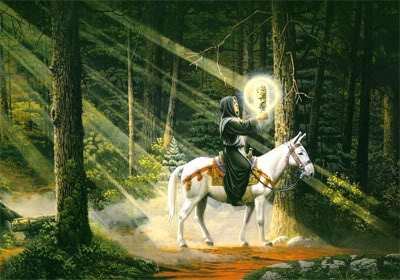
fantasy-image-6

Hero’s Journey

A magical quest
journey for the talisman
a clichéd hero

Make Visible: Focus on Form: Senryu

Welcome to Focus on Form. For the next three weeks, we poets will be writing a poem in the same form and sharing it here on the blog.

My first experience with Senryu poetry was when I posted what I thought was a Haiku and was told it was Senryu instead.  It’s a Senryu because it includes a man-made object (my glasses), even though it’s about the weather; and also because of its sarcastic tone.

Untitled

The June rain
Leaves drops on my glasses
I can’t see summer from here.

June 7, 2008
© 2008 Anne Westlund


Senryū (川柳?, literally ‘river willow’) is a Japanese form of short poetry similar to haiku in construction: three lines with 17 or fewer total morae (or “on“, often translated as syllables, but see the article on onji for distinctions). Senryū tend to be about human foibles while haiku tend to be about nature, and senryū are often cynical or darkly humorous while haiku are more serious. Unlike haiku, senryū do not include a kireji (cutting word), and do not generally include a kigo, or season word.

Senryū is named after Edo period haikai poet Senryū Karai (柄井川柳, 1718-1790), whose collection Haifūyanagidaru (誹風柳多留?) launched the genre into the public consciousness. A typical example from the collection:

泥棒を dorobō wo

捕えてみれば toraete mireba

我が子なり wagako nari

The robber,
when I catch,
my own son

(Excerpted from Wikipedia, http://en.wikipedia.org/wiki/Senryu)

The first step to writing Senryu poems is to think of a theme and what message is to be conveyed. Taking ideas from family life and experiences with friends and coworkers is a good place to start.

Once the theme is established, the next step is to begin jotting down ideas and phrases.  Build on those ideas until they form three lines and add up to 17 syllables or less. Senryu poetry seems easy to write but in actuality it is not easy to convey a complete message in three short lines.

The first line should set up the setting, and the subject should be the focus of the second line; the third line should use action to sum up the poem. This is a simple way to approach writing Senryu. With more practice and reading examples the writing process will become more natural.

One thing to remember when writing this form of poetry is that it is not complex. Senryu uses simple language and incorporates humor.  Here are a few more examples written by modern poets:

As if it were spring
the green mold
on the cheese

© Garry Gay

rush hour-
the blonde in the Porsche peels
an orange

©Robert Bauer

(excerpted from How To Write Senryu Poetry by Sarah Carter, http://www.howtodothings.com/hobbies/how-to-write-senryu-poetry)

Give it a try!  I can’t wait to see what the rest of the Poetic Muselings come up with.

“Make visible what, without you, might perhaps never have been seen.”~Robert Bresson, French Film Director

Enhanced by Zemanta

Sand in the Desert: Putting Together a Poetry Collection

I am a way-back science fiction fan, but until November,  2010, I had never

written a science fiction story. The

The cover for my forthcoming poetry collection

truth is I had a phobia about it, mainly about the world-building, which in the abstract intimidated me.

Around September or October of 2010 I decided I would simply go for it and write a science fiction novel for NaNo.  I started with the world-building: the planet, the aliens, the Terran Federation, the aliens’ society, values, arts, politics (or lack thereof). I’d been mulling over several things for years: a society based on personal responsibility, and one where the “normal” relationships contained multiple partners and included same-sex relationships.  I continued happily outlining the society and the people. I noted down about a page about the plot, including the main character, his father, and a couple of others.  I decided to write a YA/MG sci fi novel.

For various reasons which I will not fully divulge, in case any of y’all decide to read the book, I needed my aliens to be distinctive but not outlandish. I needed them to have skin color that could be found here on earth, yet still be distinctive, so for this and a number of other reasons, one of them being that I was damned sick of the good guys always being white, I made my aliens, my main character, and his father Black.

I also wanted to participate in Robert Lee Brewer’s Poetic Asides November Chapbook challenge, so I conceived of a poet to tie the two together. One of my alien characters is a scholar, and my main character ends up studying the poems of my imaginary poet. Raketh Namar, the author of the poems, exists in the universe of the novel some five thousand years before the action of the book on planet Aleyne. Raketh Namar, the poet, was the author of one of the most sacred texts of my aliens, the Aleynis. I don’t usually write prayers or write about spiritual subjects, yet I found myself writing them without difficulty. Raketh Frey, the main character in the novel, studies these poems during the course of the action. Eight of the poems, noted in the acknowledgments, appear in the book.

In the universe of the novel, this collection of poems was translated into English Common Speech by two of the other characters in the novel, Ardaval Namar and Gavin Frey, the father of my main character, Raketh Frey. Aleynis do not translate their sacred texts, and this translation is therefore unusual.

 Having written the poems, I wanted to put together the collection and publish it, but having dilly-dallied for some time, I decided to self-publish. At the present time, I have a cover, designed by Karen Cioffi, and Michele Graf has edited the collection, including some valuable suggestions about the order of the poems.

All I have left to do is to hop over to CreateSpace and  put the whole thing into their system, and after that I have to decide on a price.

Here is one of the poems, one that does not appear in the book:

Ode to My Father

When I was very small child
he was as tall
as the stars.

When I was boy-high
he had shrunk
to the height of a large tree

When I became a man,
he shrank to the size
of a fist.

When I became a father,
he rose again.
His head touched the sky.

Now he is gone.
I take my small son
and point heavenward.

“There is your grandfather”

Thank You for the Publication Leads

Hands put over another, palms down.

I have several poems and art works published lately.

First is Issue 1, Volume 2 of the Restoration Earth Journal, http://www.oceanseminarycollege.org/RE_May_2012.pdf. My collages and poems appear on pages  21 (“Hathor’s Chorus”), page 79-80 (“La  Fleur” and  “The Photograph” ) and page 95 (“Lady in Red”). I appreciate Anne Westlund for suggesting I submit to that journal, which she is published in as well.

Next, three poems are published in Love and Other Passions by the Poets of Central Florida, http://www.amazon.com/Love-Other-Passions-Central-Florida/dp/098515070X.  This came about because of a poetry group I belong to. You can find such groups on MeetUp.

Last, I had my poem A Painful Wait and its art work published in Quarter After, http://quarterafter.org/2012/03/19/issue-no-1/.

I’d like to thank all those who recommended these venues to me. The power of friends helping friends with publication leads can’t be overestimated. So thank you, everyone!


Taming the elusive Iamb

Note: In all of the following, I have indicated stressed syllables in bold.

Woods and Fields near my home

My woods and fields

An iamb is a two-syllable metrical foot where the stress is on the second syllable:

da dum

A trochee is a two-syllable metrical foot where the stress falls on the first syllable:

da dum

Robert Frost’s poem, “Stopping By Woods on a Snowy Evening” is composed of iambs:

Whose woods these are I think I know.
His house is in the village though;
He will not see me stopping here
To watch his woods fill up with snow.

For an example of dactyls check out Henry Wadsworth Longfellow‘s “Song of Hiawatha

Should you ask me, whence these stories?
Whence these legends and traditions,
With the odors of the forest,
With the dew and damp of meadows,

And now Michele’s first stanza:

We claim our fears and ghosts by what we do,
   paths drag us into, not by accident,
   territory steep in our deep taboo.*

*Note: there are several ways to read this line — this is one.

So, lines one and two consist of nothing but iambs, but line 3 starts with two trochees.

One way to figure out the meter is just what I have done above: read the lines aloud, then underline or bold the stressed syllables, then see what you have. Another is to clap as you read: clap on all the stressed syllables while at the same time keeping track of whether this matches your pattern.

Another is to imitate a well-known rhyme or song. One of the only successful rhymed stories I wrote followed the rhythm of a nursery rhyme (unfortunately I’ve forgotten which one). Here are the first couple of stanzas. Can you help identify the song or nursery rhyme I tried to follow?

Old Tom Troll
had a hole by a bridge,
not far from the River Dee,

a lonely hole
not fit for a Troll,
and full of damp debris.

So Old Tom Troll
went out for a stroll
to find new holes to see.

Old Tom Troll
had a hole by a bridge,
not far from the River Dee,

a lonely hole
not fit for a Troll,
and full of damp debris.

So Old Tom Troll
went out for a stroll
to find new holes to see.

Enhanced by Zemanta

Mary’s Villanelle: Dark Days

I love the Villanelle. It’s very musical, with the rhyme and rhythm, and the repeating lines. When done right, it really rolls off the tongue when read aloud. My first two Villanelles are not in classic form with iambic pentameter. That added an additional challenge this time around. I also went a little darker than the previous Muselings… My mind has been on The Secret World, a modern day MMO of myths, legends, and conspiracies. So that is where I took my inspiration.

wendigo_C2

wendigo_C2 (Photo credit: doctorserone)

Dark Days 

She grips her sword, the battlefield looks stark,
almost too late to set the world aright;
Hold ground, dig deep, the days are getting dark.

A flock of ravens flies through the themepark,
abandoned structures gleaming in moonlight.
She grips her sword, the battlefield looks stark.

Filth clinging like a permanent birthmark,
wendigo crouches just within their sight–
hold ground, dig deep, the days are getting dark.

Her two companions circle like a shark–
once enemies, they now combine their might–
she grips her sword, the battlefield looks stark.

The monster takes first blood: claws tears a mark
through one man’s side, his face goes deathly white.
Hold ground, dig deep, the days are getting dark.

Wendigo falters at a shotgun’s bark
and blade moves in to finish off the fight.
She grips her sword, the battlefield looks stark;
Hold ground, dig deep, the days are getting dark.

mary-sig2 (1)

Lin’s Focus on Villanelle

Cupid Cupid weather vane Pentlow, Essex.

Cupid Cupid weather vane Pentlow, Essex. (Photo credit: Wikipedia)

Here is my first villanelle,  from 2009. I found it very interesting and challenging to work in a rhymed form instead of my usual free verse.  It was also a stretch to work to  a rhyming pattern, but I managed it. I hope to see some of your villanelles posted here!

Love’s Progress

– A villanelle-
By
Lin Neiswender

Love takes wing and flies away
Shy Cupid with arrows adrift
Leaves mere mortals to seize the day

Blushing glances longings betray
Pulses beating now more swift
Love takes wing and flies away

Stem by stem a sweet bouquet
Rose and lilac scents do lift
Leaves mere mortals to seize the day

Soft low voices fears allay
Giving fear a mere short shrift
Love takes wing and flies away

New lover’s whisper, a tender play
Hearts will meet then souls uplift
Leaves mere mortals to seize the day

One kiss may give passion sway
A final tender parting gift
Love takes wing and flies away
Leaves mere mortals to seize the day

©2009 Lin Neiswender

Previously published in Love and Other Passions, 2012